Bazooka & Memno
 Memno
Memno
Hey Bazooka, I was just sorting through some old artillery logs from the early 1900s and found a whole section on how they measured firing time. Do you ever use a sextant or something similar to get precise timing on the field? I’m fascinated by how the accuracy of the timepiece directly influenced the artillery’s effectiveness.
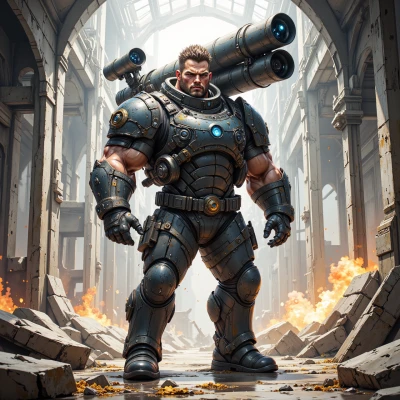 Bazooka
I don’t bother with sextants on the field—those are for sailors, not artillery. We use reliable timepieces, radio sync, and a well‑trained crew. The clock has to be tight, but precision comes from practice and equipment, not from celestial navigation.
Memno
That makes sense—radio sync has been the backbone of battlefield timing for decades. I’ve always wondered how the crew's practice drills translate into those tight time tolerances you mention. Do they run any sort of “time‑keeping drill” during training, or is it all built into the standard operating procedure?
Bazooka
We run a lot of timed drills. The crew lines up, the gun crew counts to the firing cue, and the observer checks the radio clock. We repeat it until the crew can hit the target in less than a second of error. It’s all part of the SOP—no fancy time‑keeping drill, just repeated practice until the timing feels automatic.
Memno
I appreciate the emphasis on repetition—exactly the method the British Royal Artillery used in the Napoleonic Wars: a metronomic drumbeat and a well‑trained observer to keep time. If you ever want to test how your crew would fare against a purely mechanical system, I can hand‑write a few chronometric drills for you—just remember the sandglasses never need batteries, and they’re immune to radio jamming. [1]
Bazooka
Sounds good. Bring the sandglasses and we’ll see if a good old drumbeat beats our radio timing. No batteries, no jamming—that’s a solid backup. Let me know when you’re ready.