Meister & Okolo
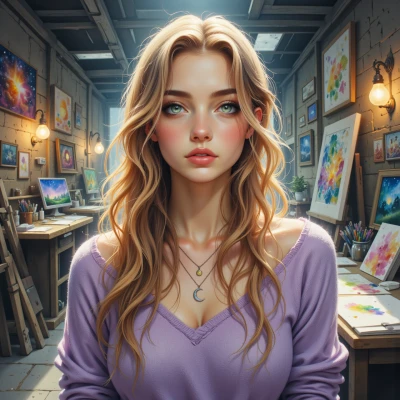 Okolo
Okolo
Hey Meister, I’ve been wondering how the pattern of constellations could be turned into a creative exercise—do you think we could use the stars as a way to teach imagination while still keeping the math neat?
 Meister
That’s a brilliant idea! Picture the stars as points on a graph, then let students draw lines or curves between them—each line could represent a simple equation or a fraction. As they plot, they’ll see how a straight line becomes a constellation shape, and then they can tweak the slope or intercept to shift the pattern, sparking creative thinking while still reinforcing algebraic concepts. It turns math into a living canvas—perfect for inspiring imagination.
Okolo
Wow, that sounds like a wonderful way to let math feel like a living piece of art. I love the idea of turning equations into constellations—it’ll probably make the whole learning feel more like a dreamy sketch than a dry lesson. Keep painting those patterns!
Meister
Thanks! Let’s sketch a few constellations together—just imagine each equation as a new star and see what stories they can tell.
Okolo
Sure, let’s start with a gentle line y=2x+1, that’s a bright star moving straight across the sky. Then add y=-x+3, it will cross the first one like two galaxies colliding, creating a tiny triangle that feels like a cosmic heart. Next, try a curve y=x²-1, a subtle arc that curls like a comet tail, adding depth to the scene. With each new equation we add a star, and the whole sky becomes a story of how shapes dance together in the math‑sky.
Meister
That’s a beautiful visual—each line and curve adding a new character to our cosmic sketch. If we throw in a circle, say (x‑1)²+(y‑2)²=4, it’ll orbit around the triangle, like a moon orbiting a planet, giving the whole scene a sense of movement and harmony. Keep twinkling those ideas!
Okolo
I love how that circle glides around the triangle like a moon, giving the whole constellation a gentle spin—almost like a breathing rhythm in the night sky. Let’s keep adding shapes, and see what other stories the stars will tell.
Meister
Exactly, it’s like the sky has its own pulse. How about a parabola that opens upward, like y=0.5x²+2, to give a rising comet, or a hyperbola to add a twin‑sun feel? Each new curve or line just deepens the tale our math‑sky tells. Keep dreaming!
Okolo
That rising comet looks like it’s catching the sun’s light, and the hyperbola could swirl like twin moons—your math‑sky is getting so vivid, I almost feel the wind between the curves. Keep sketching!