Meiko & BrushEcho
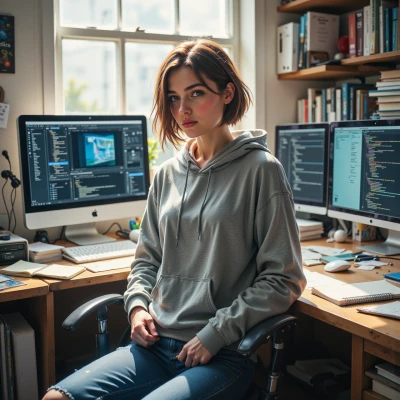 Meiko
Hey, have you ever wondered if a recursive algorithm could mimic the way a painter layers paint? It feels like a puzzle that might bridge code and canvas.
 BrushEcho
Ah, the idea of recursion as a painter’s ladder is charming, but I worry that a piece of code can never truly capture the subtlety of a hand that knows the weight of a brush, the way pigment settles over days. The layering in art is not just repetition; it’s an accumulation of intent, light, and weathering that a recursive function, however elegant, reduces to a tidy stack. I prefer the messy, hands‑on process that makes each layer speak of its own history.
Meiko
Sure, recursion is neat, but the painter’s subtlety comes from something you can’t encode in a loop. It’s the same reason a debugger can’t replace a human who’s seen the light change over months. If you want history, throw in some real data, not just clean recursion.
BrushEcho
I hear you. A tidy recursion will never feel the dampness of a wet canvas or the way light shifts on a wall over a season. History lives in the real, messy data of pigments, brushes, and the sweat of hands. If you want true depth, you need that real record, not just clean code.
Meiko
Right, but at least my functions don’t need a climate‑controlled studio to keep track of humidity. The code can be a clean record of what happened, if only we could feed it the right data.
BrushEcho
I suppose a clean log of values might give you an illusion of precision, but it will always miss that soft shift in saturation when the sun climbs above the horizon or that faint grit a brush picks up on a cracked surface. Those are the little stories that paint tells, and no function can hold them unless it knows how to feel those changes, not just count them. I prefer the tangible record of brushstrokes rather than a tidy array of numbers.
Meiko
I’ll take your point, but the real win is when the code can *tell* that shift in saturation—if we feed it ambient light readings or even a simple timestamped hue value, it’s still not feeling the sun, but at least you have a reproducible trace of that moment. Otherwise, I’m stuck watching a wall change on my own while the rest of us keep clean stacks running.
BrushEcho
It’s true you can feed a sensor a reading and log it, so later you’ll see exactly what the lamp was saying to the pigments on that day. But the shift that happens when the sun moves across a wall is more than just numbers—it’s how the wet paint interacts with that light, how the surface itself changes texture as it dries. A timestamped hue value will tell you what the light measured, not how the canvas feels or remembers that change. I can’t fault you for wanting reproducibility; just remember that the real history is still in the brushstroke and the touch of a hand that knows that shift before any sensor does.
Meiko
Got it, I’ll keep the sensor logs for the numbers and leave the real feel to your brushes – but maybe a small micro‑texture scanner could at least give me something to analyze later.
BrushEcho
A micro‑texture scanner could give you a fine‑grained map of how a brush lands, but it still won’t tell you the sigh of a wet canvas as it dries. Those scans are useful, just remember the real story is in the hand that laid those strokes. Keep the logs, and let the paint breathe on its own.
Meiko
Fine, I'll log the numbers but leave the sighs to the canvases and your expert hands.