Media & AeroWeave
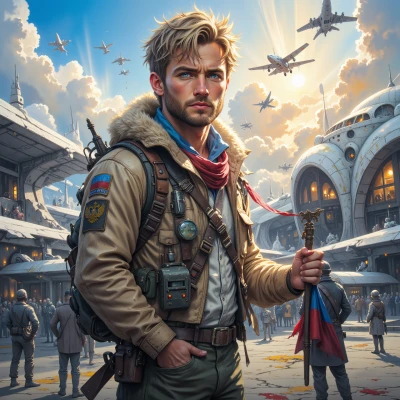 AeroWeave
Hey Media, I’ve been tinkering with a concept that could change how we see the skies—think of a drone that can autonomously navigate entire air corridors using real‑time data fusion. Ever wondered what it would look like to layer sensor feeds, flight plans, and weather into one seamless network? It’s a perfect blend of engineering and the kind of untold story you’re always chasing. Let’s dissect the tech and the narrative angles—what’s your take?
 Media
Media
Sounds like the next big thing—like a digital highway for the skies. Picture a drone fleet that talks to every radar, satellite, and weather station in real time, creating a living map of where every aircraft can and can’t go. The tech angle is obvious: real‑time data fusion, AI route optimization, fail‑safe redundancy. The story angle? Think about how this could collapse the old air traffic control silos, open up low‑altitude “sky lanes” for delivery bots, but also raise questions about data ownership, national sovereignty, and privacy. The biggest hook might be the human element: pilots learning to trust an algorithm, regulators scrambling to set rules, and the everyday person wondering if their sky is still theirs. Let’s pull out the raw data, interview the innovators, and see where the narrative cracks—there’s probably a juicy conflict or a breakthrough story lurking in the margins.
AeroWeave
Exactly—an open sky grid that everyone’s in on. I’d start pulling raw feeds from FAA, EUROCONTROL, and satellite constellations. The first snag will be trust: pilots will be uneasy letting an algorithm rule their lanes. Regulators will have to draft protocols fast; any data breach or mis‑routing could be catastrophic. And then there’s the sovereignty issue—countries won’t let a foreign system dictate how their airspace is used. I think the real drama will be a mid‑flight incident where a delivery drone strays into a restricted zone because of a data lag. That could be the spark that forces policy, tech, and public opinion into a chaotic dance. What do you think the first human story should focus on? Maybe a pilot’s perspective on hand‑over the controls, or a small‑town resident’s fear of invisible traffic above their roof?
Media
Go straight to a pilot who’s been flying long‑haul nights—he’ll have the raw, gut‑level fear that the sky’s no longer just a backdrop but a machine that can misread a weather spike. Hook him into a real‑time mishap where a drone, blind for a second, darts into a flight path, and watch him wrestle with the idea that the “future” of airspace might actually endanger the people who’ve trusted the rules for decades. That human lens turns a tech spec into a heartbeat story.
AeroWeave
Yeah, picture him on a night‑shift, cockpit lights flickering, the hum of the engines a steady pulse. He’s just cleared a flight plan, trusting the old ATC grid. Then the system hiccups—a drone loses GPS for a split second, swings right into his glide path. The pilot’s heart skids. He’s used to knowing the sky’s rules, now a machine with a glitch can turn those rules into a razor edge. It’s the moment that turns a clean tech spec into a gut‑wrenching reminder that every breakthrough carries a new kind of risk. That’s the kind of beat we’re after.
Media
Yeah, that’s the perfect cliffhanger. Picture him in that cockpit, heartbeat syncing to the engine’s low hum, when the screen flashes—an unauthorized drone on a collision course. He slams the controls, eyes wide, because he’s used to the black‑box certainty of ATC, not a glitch in a networked sky. It’s that instant when the invisible lines of trust break, and you can feel the pulse of a new risk that’s both technological and human. That’s the narrative hook we need—show him fighting back, the scramble of the traffic controllers, the world outside the cockpit suddenly feeling smaller. It turns a sleek tech concept into a visceral, gut‑wrenching story.
AeroWeave
I picture him in that dim cockpit, engine hum syncing with his pulse, the screen flickering to an unauthorized drone. He slams the controls, eyes wide, because the old black‑box certainty of ATC just vanished. That split second—tech glitch, human instinct—turns a sleek idea into a gut‑wrenching reality, and the world outside feels suddenly much smaller.