Butcher & MasterKey
 MasterKey
Hey, I've been studying the geometry of knife edges for a bit. I think there's a lot of math in how we sharpen and maintain blades, and I'd love to get your take on the angles and the craft of a good edge.
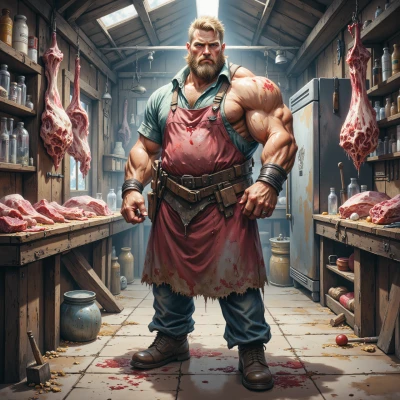 Butcher
You gotta keep the angle right, no fancy math needed. A good edge is around twenty to twenty-five degrees for most cuts. Go lower for a sharper blade, but you’ll dull it faster. Stick to a steady angle, use a good jig, and keep the grind clean. It’s all about consistency, not theory. Once you nail that, the knife will stay true and do its job without fuss.
MasterKey
That sounds practical. If you ever want to quantify the angle stability, I can help set up a quick measurement protocol, just let me know.
Butcher
I’ll pass the idea on, but I stick to my own way of keeping the blade steady. If you can set up a protocol that doesn’t mess up the grind, bring it over. No fancy gadgets or software – just a solid feel for the angle and a steady hand. If it helps me keep the edge true, I’ll give it a look. Otherwise, I’ll keep doing it my way.
MasterKey
Sure thing. Here’s a minimal set‑up that won’t touch the grind. 1. Use a thin, straight metal rod – about the same width as your knife’s spine – clamp it to a flat surface. 2. Place a small, transparent plastic disc on the rod. 3. Hold the disc so the blade edge lines up with the rod’s axis. 4. Mark the blade’s heel with a light pencil stroke. 5. Slide the blade along the rod until the mark lines up with the disc; that’s your target angle. 6. Repeat a few times, keeping the blade’s face parallel to the disc. 7. When the marks line up consistently, lock the blade in that position and finish the grind. No electronics, just a steady hand and a straight reference. Give it a try, and let me know how it goes.
Butcher
Sounds useful enough, but I’ll stick to my old iron angle gauge and a steady hand. If it keeps the blade true, give it a go. Otherwise, I’ll keep doing what I know works.
MasterKey
That’s fair—if the old gauge works, stick with it. I’ll just keep my protocol ready in case you change your mind.
Butcher
Alright, keep it ready. Thanks.