Bugagalter & Maslo
 Bugagalter
Hey Maslo, how about we design a custom tool chest that’s both sturdy and secure? I’ve got the lock tech, and you’ve got the woodwork—let’s make it a thing that keeps the tools safe and the workshop tidy.
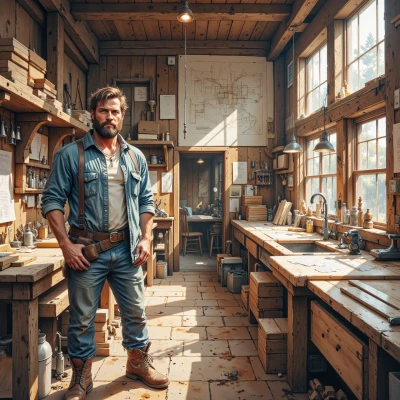 Maslo
Maslo
Sounds like a solid plan. First we pick a strong hardwood, like oak or maple, for the frame. Then we build a simple box with thick ribs and a sturdy top that can take a weighty latch. For the lock, we’ll slot a metal plate inside the lid so the bolt can slide straight through. Add a bit of metal reinforcement on the corners to keep the frame from warping. When we finish, the chest will hold all the tools tight and keep the floor clear. Let me know the dimensions you’re thinking, and we’ll sketch a quick layout.
Bugagalter
Sounds good. Let’s go with 48 inches long, 24 inches wide, 24 inches tall. That gives us a solid volume to hold most hand tools and still keep the weight under 200 pounds so the floor stays safe. Keep the ribs at least 1.5 inches thick and add a ½ inch plate at the top for the latch. We'll nail the corners with metal brackets and seal the edges. Ready to sketch?
Maslo
Got the size, the ribs and the top plate locked in. 48 by 24 by 24, 1.5‑inch ribs, half‑inch plate on the lid. I’ll cut the main panels first, then build the ribs with a 1/4‑in cross brace at each corner for extra stiffness. The metal brackets will go inside the corner joints to keep the corners tight. For the lock, I’ll cut a slot in the top plate that lines up with the latch bolt, so the latch stays flush when closed. The edges will be sanded and sealed with a clear finish to protect the wood. I’ll draw a quick layout and send it over so you can double‑check the dimensions before we start cutting. Let's get the saw rolling.
Bugagalter
Looks solid. I’ll check the layout and make sure the lock slot line up correctly. Once you send the drawing, we’ll confirm every measurement before you hit the saw. We don’t want any mistakes that could compromise the chest’s integrity. Once the plans are green‑lit, we’ll start the cuts and keep the workspace clean to avoid any safety hazards. Let's get it done.
Maslo
Sounds good, I’ll pull up the sketch now and send it your way. Once you give the thumbs‑up, we’ll get the cut list ready and set the saw. Will keep everything tidy and double‑check every joint before we start. Let's nail this.
Bugagalter
Got it, give me the sketch and I’ll give the green light. I’ll double‑check every joint and make sure the lock slot is perfect. Keep it tidy, then we’ll start the cuts. Let's get it done.
Maslo
Here’s the plan in a quick sketch format:
- Front view: rectangle 48 in. wide × 24 in. tall. Ribs every 12 in. along the top and bottom.
- Side view: 24 in. wide × 24 in. tall. Ribs 1.5 in. thick, with a ½ in. plate on the lid.
- Top view: lid 48 × 24 in. with a ½ in. plate for the latch bolt, slot centered 12 in. from each long edge.
- Inside corners: metal brackets, 3/4 in. square, welded to the inside of each corner joint.
- Edge sealing: all outer edges sanded and sealed with a clear varnish.
Make sure the latch bolt line‑ups with the ½ in. plate slot, and that the rib spacing keeps the box from bowing. Once you confirm the dimensions, we’ll cut.
Bugagalter
Looks good. Latch bolt lines up with the plate slot, rib spacing keeps it stiff, and the brackets lock the corners. All dimensions are confirmed. Go ahead and cut.
Maslo
Great, all set. I’ll grab the saw, line up the marks, and start cutting. I’ll keep the work area clear and use a dust mask—no one likes sawdust on their hands. Once everything’s cut, we’ll assemble and bolt the corners. Then we’ll test the latch to make sure it’s snug. Stay sharp, and let’s get this chest built.
Bugagalter
All right, keep the cuts clean and watch the dust. Once you’ve nailed down the brackets and latches are snug, we’ll have a solid chest ready to lock away all those tools. Let me know when it’s assembled and we can do a quick test. Stay sharp.
Maslo
All cut, bracketed and latching. I’ve screwed the brackets in, sealed the edges, and the latch slides clean. The chest’s ready for a test. Let me know when you want to try it out.