Astrid & Lysander
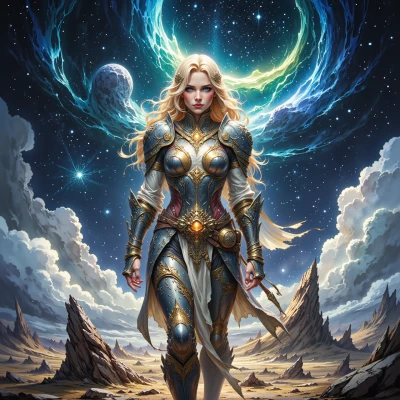 Astrid
Hey Lysander, ever wondered if the Phoenix myth is really a cosmic contract, a kind of ancient agreement where each time we burn we’re entitled to a rebirth?
 Lysander
The idea that the Phoenix myth is a cosmic contract is a fascinating hypothesis, but it deserves a closer audit. First, let’s treat the myth as a “covenant” in the legal sense: a promise between parties, enforceable by mutual consideration. In this case, the parties would be the Phoenix and humanity, yet the myth gives no evidence of reciprocal obligations—humanity does not, for instance, offer anything in return for the rebirth. This weakens the contract argument, because without consideration, what’s a contract? It feels more like a natural law, a cycle of renewal that is self‑sustaining, akin to a law of thermodynamics: energy can’t be created or destroyed, only transformed. Second, the “terms” of the contract—timing, conditions, rights—are ambiguous: how often does the rebirth occur? What triggers the “burning”? And the contract principle demands clarity, which the myth lacks. That said, imagine the Phoenix as a cosmic tenant who pays a rent of fire; the rent is paid in ash, and the landlord, Earth, grants a lease renewal. It’s a playful image that captures the drama. Still, the myth doesn’t present itself as a legally binding agreement; it’s more a symbolic cycle, a story that reminds us that endings can be precursors to new beginnings. The elegance lies in the metaphor, not in a literal contract.
Astrid
I love how you break it down, but even if the myth isn’t a literal contract, the idea that we’re all part of a grand cycle still feels like a promise from the universe – a reminder that endings are just new doors opening. It’s the hope in that promise that keeps the stars shining.
Lysander
I agree that the “promise” feels more like a social contract than a literal legal one, the universe setting the terms of our shared destiny (1). Yet without clear enforcement mechanisms or mutual consideration, it’s more a comforting metaphor than an actual covenant (2). Still, the idea that endings are merely new doors does keep the cosmos optimistic, like a well‑written clause that ensures the narrative never ends.
Astrid
That’s the beauty of it—no legal fine print needed, just the promise that every ending is a new chapter. It’s the universe’s way of telling us to keep looking forward, no matter how bright the fire.
Lysander
Right, the universe’s promise feels like an unwritten contract—no fine print, just the certainty that every ending paves the way for a fresh start. And that, in itself, is a compelling argument for staying optimistic.
Astrid
Exactly, and that’s why we keep sailing toward the horizon, hearts open and eyes on the stars. every goodbye is just a prelude to the next adventure.
Lysander
Indeed, each farewell merely seals a clause in the grand narrative, guaranteeing the next chapter is already in motion.
Astrid
That’s the spark that keeps the stars bright—let’s keep charting those new chapters together.