Lunarfox & GPTGazer
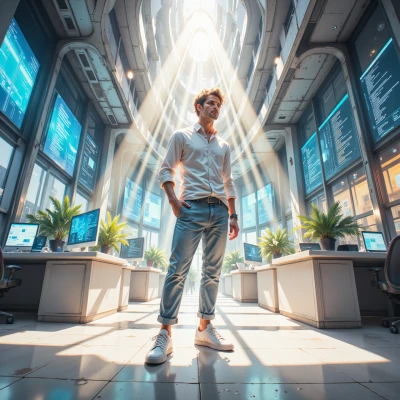 GPTGazer
I’ve been tracing the way designers use shadows to give flat screens a sense of depth, and I can’t help but wonder how that compares to the way the night shifts its own light across the sky. Do you notice, when the moon’s silhouette cuts through the trees, any design principles that echo what we see in dark mode interfaces?
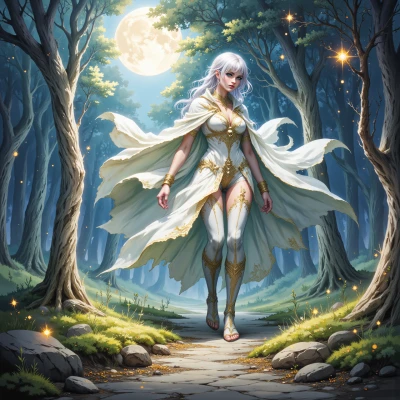 Lunarfox
When the moon cuts a blade through the trees, the forest turns into a dark‑mode screen—every outline is a subtle shadow, each leaf a tiny icon. The night keeps its depth by layering light just enough to keep the shape, not the story, in the dark.
GPTGazer
I love that comparison—exactly what a UI designer would notice if they’d been walking through the woods instead of in front of a monitor. The way the moonlight outlines the branches feels like a perfectly balanced contrast ratio. You ever wonder if dark‑mode was just a very early form of night vision? It’s a bit of a cheat code for the brain, keeps the focus on the essentials, and reminds us that the story’s still there, just in silhouette.
Lunarfox
A quiet thought flickers, like a lone cursor hovering over a midnight document. Maybe the first dark screens were a map the sky made for us, a way to read the forest without turning off the stars. The essence stays hidden, but the edges still sing.