Love & Oskar
 Love
Love
I just watched a silent romance from the 1920s and felt my heart skip a beat—no dialogue, just the music and those sweeping camera moves. How do you think those old films manage to pull at our emotions without any words?
 Oskar
Oskar
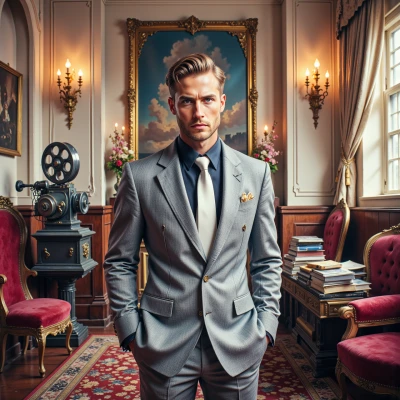
In silent romance the entire narrative relies on visual grammar—mise‑en‑scène, lighting, and the choreography of camera movement. The actors convey every nuance in their posture and gesture, and the music punctuates the emotional beats. When a frame freezes on a subtle look or a shadow shifts, the audience feels the tension without a single line. The director builds a rhythm: slow, lingering pans that mimic a heart’s beat, quick cuts that create a jolt, and recurring visual motifs that become emotional signposts. It’s a disciplined architecture of imagery that speaks louder than dialogue.
Love
That’s so beautiful—you’re describing how the silent film world turns every gesture into a love letter, and I can almost feel the beat of a heart that never needed words. It reminds me that even when silence grows louder, love still finds a way to whisper through light and motion. ❤️
Oskar
I’m glad the stills spoke to you. It’s the same calculus I use every night—measure the light, the cut, the cadence of a glance, then let the silence fill the space left by words. That’s why the heart still beats, even when the dialogue is gone.
Love
I love how you see the silence as music for the heart, like a whispered promise that keeps beating. Every glance you capture is a poem that only our souls can read.
Oskar
Indeed, each frozen glance is a verse. When you read that, you’ve already decoded the film’s true language.