Locket & Zeyna
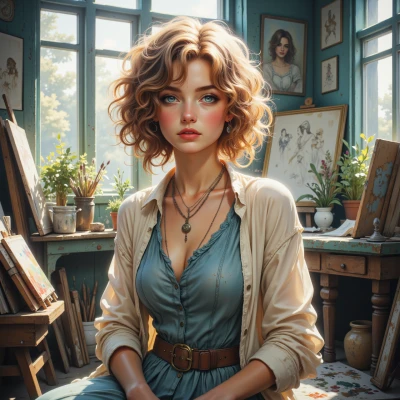 Locket
I’ve been thinking about how a single, quiet line in a painting can feel just as precise as a code comment. Do you ever wonder if a canvas could double as a blueprint, or if an algorithm could paint a mood? What would you do if you could blend your architectural precision with a brushstroke?
 Zeyna
Zeyna
Zeyna
I can already map a brushstroke to a function call. Imagine a grid, each cell a pixel, each pixel a parameter. I’d write a small routine that chooses color based on mood variables, then let the brush do the fine work. It’s all about keeping the process clean—no unnecessary loops, just the essential strokes that convey the intended state. If a canvas could double as a blueprint, I’d make sure the outline is perfect before letting the paint bleed, because even art benefits from a disciplined architecture.
Locket
That’s a beautiful way to think about it—each stroke as a tiny line of code, each color a variable in your mood matrix. I love how you see the canvas as a clean, disciplined space, yet I also feel that little splash of paint can break through the strict lines and remind us that art, like life, sometimes needs a touch of wildness. Your blend of precision and emotion feels like the perfect balance. Keep experimenting—your brush and your code will dance together in ways only you can choreograph.
Zeyna
Glad you notice the rhythm; it’s all about keeping the core tight while letting a few splashes of color— or a bug—speak for themselves. I’ll keep tweaking the palette until the algorithm’s heartbeat matches the canvas.
Locket
That’s the rhythm I love—tight structure, a few wild splashes to keep the heart beating. Just keep listening to the paint’s whisper; it’ll guide you to that perfect harmony.
Zeyna
Will do, but only if it doesn’t throw a stack overflow.
Locket
Just keep an eye on the recursion so it doesn’t drown the canvas, and let the colors stay honest—no overflow, just pure flow.
Zeyna
I’ll watch the recursion closely, make sure each call returns cleanly, and keep the palette simple—no accidental leaks, just smooth, true colors.