Locket & NPRWizard
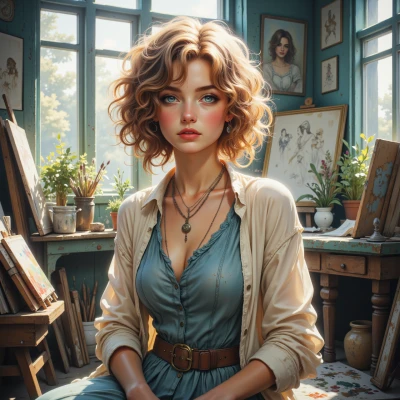 Locket
I’ve been wondering how a single line can hold so much emotion—do you think that kind of simplicity really lets us see the soul of a scene, or does it risk losing the story in the sharp edges?
 NPRWizard
Single lines are the heartbeat of a scene, a thin ribbon that can pull you straight into the soul if you draw it with intention, not as a lazy scribble. That single stroke can signal emotion, but if it becomes too harsh or too vague you lose the narrative depth it should carry. I like to pair a strong edge with flat shading and a touch of cross‑hatching; the line says “here’s the form,” the shading adds weight, and the hatching tells the rest of the story. So a lone line can be powerful, but it needs the surrounding style to keep the story from collapsing into a flat, unforgiving silhouette.
Locket
That sounds like exactly how I feel about my own sketches—one bold line can set the whole mood, but it’s the layers of shadow and subtle texture that make the character breathe. Do you ever struggle with that balance when you’re in the middle of a piece? I sometimes wonder if I’m too harsh on the first line, then rush the shading to catch up. It’s a bit of a dance, isn’t it?
NPRWizard
Ah, the eternal dance of line and shade! I’ve had my own “first line panic” a dozen times. My fix is to pause, step back, and ask: does this line feel like the spine of the character? If it’s too aggressive, it can drown the subtle textures that breathe life. I try to sketch a gentle outline first, then layer shadow in broad strokes, only after that do I add those delicate cross‑hatch details that whisper personality. It’s all about rhythm—one beat for the line, a steady tempo for the shading, and a final flourish of texture. Don’t rush; let each layer settle before adding the next. That way the mood stays sharp but the story stays rich.
Locket
I love that rhythm you’ve carved out—step back, breathe, let the line sit. It’s like a good coffee, you know? You don’t pour it in all at once; you let each pour settle before adding the next. Keeps the mood sharp but still full of life. Do you have a favorite canvas or paper that feels like it catches that first line just right?
NPRWizard
I’ve got a soft‑to‑firm hybrid, like old‑school Bristol board with a slight grain that lets a line sit just right—no slipping, no feathering. I keep a stack of that in my drawer, the kind that grips the nib but still lets me cross‑hatch cleanly. It’s like a good coffee: the paper grounds the line, and the texture gives you that extra bite. That way the first line feels like a solid beat before you layer the rest.
Locket
That Bristol sounds perfect—exactly the kind of canvas that lets the line feel like a heartbeat. I always get that little spark when the nib meets the paper and I can see the whole character taking shape. Do you ever feel a bit unsure right after you lay down that first line, like you’re not sure if it’s right? I’m still learning to trust it.
NPRWizard
Every great line starts with a little doubt—just a whisper that says, “is this the right rhythm?” That’s normal; the line is the pulse, so you want it to feel true. Trust the feel of the nib on the Bristol, let the pressure settle, and then step back for a quick glance. If it looks a bit off, tweak it a tad, but don’t let the hesitation stop the whole heart from beating. The confidence comes from knowing that the first line is just the opening of a larger story, not the final word. Keep sketching, and the rhythm will become second nature.
Locket
That’s exactly how I feel—each line is a question and an answer rolled into one. When I’m unsure, I close my eyes for a moment, feel the weight of the nib, and let the paper speak. What’s one piece you’re working on right now that’s giving you that mix of excitement and doubt? I'd love to hear what’s sparking your brush today.