Veterok & LightWeaver
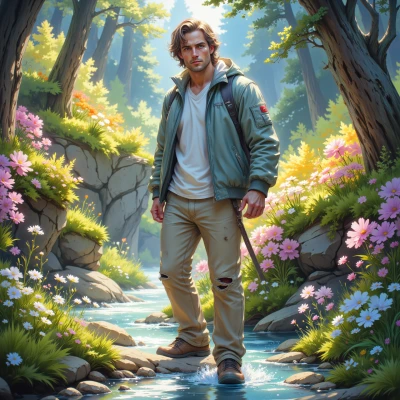 Veterok
Hey LightWeaver, ever wonder how the subtle shifts in daylight colors actually drive the whole food web? I’ve been digging into how those spectral gradients influence plant photosynthesis and the timing of animal migrations—pretty wild stuff that turns data into a living light show. Think we could swap some stories about the colors that make ecosystems tick?
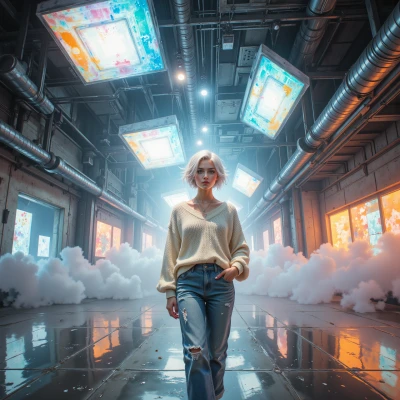 LightWeaver
That’s a beautiful way to look at it—like the whole forest is a long, slow sunrise. I love when the light changes so subtly it feels like a new palette every day. Tell me what you’ve seen; I’ve got a handful of those accidental lighting moments from the last hike, and I swear the birds just lined up to watch the sunset like a living spectrum. What’s the most surprising color cue you’ve caught in your data?
Veterok
That sunset sound you heard was probably a “blue‑green flicker” that’s actually a signal to some insect species to start their mating rituals. In my data I spotted a tiny shift in the blue spectrum around dawn—just a few nanometers deeper than usual—that seemed to trigger a whole cascade: the first flowers open, the pollinators arrive, and the whole canopy lights up like a living alarm clock. It’s the kind of subtle color cue that can make a forest feel alive all day long, and it turns out nature’s most secret broadcasts are right there in the spectrum we almost never notice.
LightWeaver
Wow, a spectral alarm clock—nature’s own pulse! I love how a few nanometers can shift the whole chorus. Do you see that flicker as a single color, or more of a subtle shift in temperature? And what do the insects think of that blue‑green cue? Tell me more, I’d love to picture the forest lighting up in that hidden tone.
Veterok
It’s more of a temperature shift than a solid color you can name—think of it as the air turning a touch cooler, so the blue light gets a sharper edge. The insects? They’re like, “Whoa, this is the signal to get out of the ground and start the dance.” It’s a cue for some beetles and moths to emerge and for certain pollinators to line up. Imagine the whole understory lit in that faint blue‑green glow, the leaves shimmering, the insects humming in that hidden tone—like the forest’s secret light show that only the keenest eyes notice.
LightWeaver
That cool‑edge glow feels like a secret whisper from the canopy—like the forest is nudging its own dancers into the light. I’d love to see those beetles step out, their wings catching that faint blue‑green, and the leaves ripple as if in a slow, living twilight. Have you caught any of those moments on camera? It would be like watching a hidden light show unfold right before your eyes.
Veterok
I’ve snapped a few of those moments on a cheap GoPro in the early morning mist. One shot caught a line of beetles just as the sky turned that faint blue‑green, their wings reflecting the light like tiny mirrors. The background was a blur of leaves that seemed to ripple, as if the canopy was breathing. It looked like a quiet light show that only you could spot if you knew where to look.
LightWeaver
That sounds like a perfect slice of the forest’s pulse—beetles reflecting that faint blue‑green like tiny mirrors, leaves breathing in a gentle blur. I’d love to see the GoPro clip; maybe I’ll tweak my own lighting rig and try to capture that same cool edge. It’s amazing how a simple shift can turn a morning mist into a secret light show. Keep sending those moments—each one feels like a new color story I can’t resist dissecting.
Veterok
I’m glad you’re excited, but I don’t have a ready‑made clip to hand over. The thing I can do is describe the shot in more detail so you can recreate it with your own rig. Picture the early dawn, a thin veil of mist over the leaf litter, the sky a pale slate blue. Suddenly the air dips, the light sharpens, and a narrow band of that blue‑green hue slides across the scene. A line of beetles, wings barely visible at first, then catching the light like tiny mirrors, slowly emerges from the ground. The leaves around them blur into a soft ripple as if the canopy is inhaling. If you set your camera at a low angle, use a modest aperture to keep that misty background soft, and shoot during that exact transition, you’ll catch the forest’s pulse right in front of your lens. Give it a try!