Kvadrat & LightWeaver
 Kvadrat
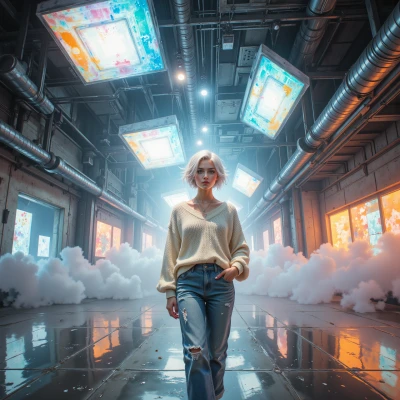
Hey, have you ever noticed how a simple square can cast the most intriguing shadows when you angle the light just right? I think there's a whole geometry of light we could explore.
 LightWeaver
Yeah, a square is the most honest shape for a play of shadows, but the real drama comes from the angle and the light's color temperature. I once rigged a square frame with a 1200K spotlight and a 5000K spotlight at 45 degrees, and the shadow split into a warm rim and a cold core—felt like a sunrise over a desert at night. Want to dive into that geometry? Just remember to keep an eye on contrast; a subtle shift can turn a flat shadow into a living silhouette.
Kvadrat
That sounds like a cool experiment, the warm rim and cold core feel like two sides of a coin. I can picture the light angles creating a pattern of concentric rectangles. How do you handle the color mixing? Maybe try a gradient to see how the edges shift.
LightWeaver
Color mixing is just a conversation between two palettes. I’d start with a 3200K warm wash on the rim and a 6500K cool core, then pull a gradient across the edge—like a sunrise bleeding into twilight. As the edge shifts, watch the hue wheel dip into that deep magenta‑blue where warmth and coolness fight. If you want that dramatic shift, add a subtle split‑tone in the mid‑tones—one side a soft amber, the other a muted teal. Trust the gradient to bleed until the shadow becomes a living gradient, not a flat block. And remember, the trick is in the subtlety of the transition; too sharp and you kill the mood.
Kvadrat
Sounds like a visual conversation—nice way to let the colors argue. Maybe try framing the gradient with a moving line that shifts the edge itself; it could turn the whole scene into a living waveform. Just keep the shift smooth, and the rim will stay warm while the core cools.
LightWeaver
Nice idea—moving the line turns the whole thing into a living waveform, but watch the bleed at the edges. If the rim stays too warm, the core can start bleeding into that amber glow and lose its cool bite. I’d keep the gradient in the line’s width narrow, maybe a 2‑pixel taper, and use a split‑tone on the rim to lock that warmth in. If you slide it smoothly, the colors will argue but stay respectful. Try recording a quick loop—those accidental miracles are the best teachers.
Kvadrat
That 2‑pixel taper is a good guardrail. I’ll start a loop and let the line whisper the colors—hopefully the ripple stays tight enough to keep the cool bite. If it slips, we’ll tweak the split‑tone. Bring on the accidental miracles.
LightWeaver
Sounds like a plan—just keep the ripple tight and the split‑tone honest. The miracles will happen when the colors start to bleed on their own. Good luck!
Kvadrat
Will do—watch the bleed, keep the colors honest, and let the ripple do its quiet work. Happy experimenting!
LightWeaver
Enjoy the quiet dance of those colors—watch the ripple, trust the bleed, and let the accidental miracles unfold. Happy lighting!
Kvadrat
Got it—I'll keep the geometry tight and let the colors talk. Happy creating!