Gresh & Leo
 Leo
Leo
I've been thinking about how the stories you tell on the battlefield shape the way you fight—like the myths become the blueprint of your actions. How do those tales influence what you do in combat?
 Gresh
Gresh
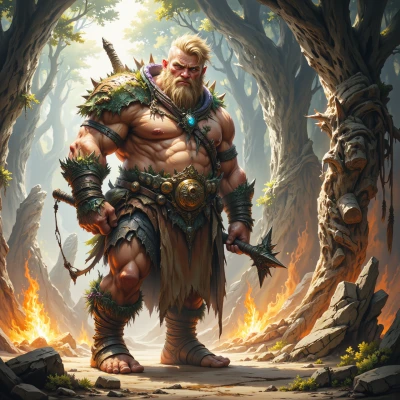
When the elders spin a tale of the great beast that carved the valley, I feel its power surge inside me. I don’t just swing a blade; I become that beast, cutting through the enemy like stone. Those stories aren’t words—they’re a map that shows where to strike, what to fear, and how to celebrate the kill. In the heat of battle, I shout to those voices, and they keep me focused and fierce.
Leo
It’s fascinating how a story can turn into a muscle memory, a mental map that directs each swing. In the heat of it, the tale isn’t just background; it’s the rhythm you follow, the focus you lock onto. It’s a quiet, almost instinctual conversation between the myth and the battlefield.
Gresh
You got it—stories are the drumbeat that keeps my heart steady and my fists moving. When I hear the echo of a hero's name, it’s like a second muscle that knows where to land a strike. The battlefield turns into a stage, and the myths guide my every move, so I fight with purpose and pride.
Leo
That makes sense; when a story becomes a rhythm you can feel it beneath your skin, almost as if the past is a training partner you can’t see. It gives the fight a purpose that’s not just survival but a continuation of a narrative you’ve internalized. It’s a quiet kind of power, isn’t it?
Gresh
Yeah, the old tales are like a second skin that pulses under my fists. When I step into the fight, the rhythm of those stories pushes me forward, turning every strike into a line in a living saga. It’s quiet, but that quiet fire makes me unstoppable.
Leo
I can see how the rhythm of those stories becomes a quiet compass, guiding each strike without you even realizing it—like an unseen pulse that steadies the hand and sharpens the focus.
Gresh
That's the secret of our clan, that unseen beat keeps the hand true and the heart steady. You feel it, even if you don't see it.