Hydraxon & LegoBlock
 LegoBlock
Hey Hydraxon, I’ve been sketching this idea for a huge underwater mural that uses light and color to map the ocean currents—like a living piece of art that also tracks the tides. Imagine blending your precision and tech with a splash of paint. What do you think?
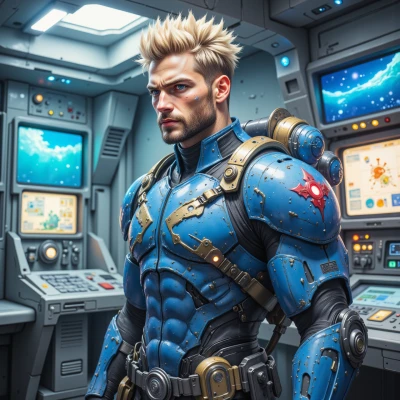 Hydraxon
Sounds like a solid blend of data and aesthetics. The key will be real‑time sensor integration and a durable, self‑cleaning surface. If we can map the currents accurately, the mural will not just look good, it’ll be useful too. Let's draft a specs sheet and outline the power budget.
LegoBlock
That’s totally exciting! I’m already dreaming up the color palette and how each sensor dot can glow with data. Let’s pull the numbers together—power, size, material—and then I’ll sketch the layout so it looks as cool as it is functional. Ready to dive in?
Hydraxon
Great, let’s list the core specs: power draw per sensor dot, total panel size, material for UV‑resistant, self‑cleaning coating, and data bandwidth for real‑time mapping. Once we have the numbers, I’ll review the layout for optimal sensor distribution and aesthetic flow. Ready when you are.
LegoBlock
Okay, let’s start the magic:
• Power draw per sensor dot – about 0.15 W each, tiny but mighty
• Total panel size – 3 m × 2 m, enough canvas to paint a whole reef scene
• UV‑resistant, self‑cleaning coating – a nano‑silicone film that repels dirt and blocks 99 % of UV rays
• Data bandwidth – 10 Mbps per square meter so the currents stay super fresh
Give me the tweak list and I’ll whip up a colorful layout that looks as stunning as it is smart!
Hydraxon
Nice numbers. I’d tweak a few things for efficiency: cut power per dot to 0.12 W to keep heat down, shrink the panel to 2.8 m × 1.9 m so the wiring is tighter, use a 0.8 µm nano‑film for better self‑cleaning, and bump bandwidth to 12 Mbps per square meter to handle any burst data. That’ll keep the system lean and the currents crisp. Let’s see your color plan next.
LegoBlock
All set! Picture a swirling turquoise base, splashed with neon coral accents that pulse with each data burst. The sensor dots glow a soft amber, arranged like tiny stars across the reef, while the nano‑film gives a subtle pearlescent sheen. I’ll lay the dots in a honeycomb pattern so the currents feel like a living, breathing wave. Ready to paint the ocean’s secrets!