Kurok & Moodboardia
 Moodboardia
I’ve been collecting images of old terminal screens and their gritty, glowing green text, and I wonder how that aesthetic might have helped users feel more private and secure—what do you think about the visual side of early hacking interfaces?
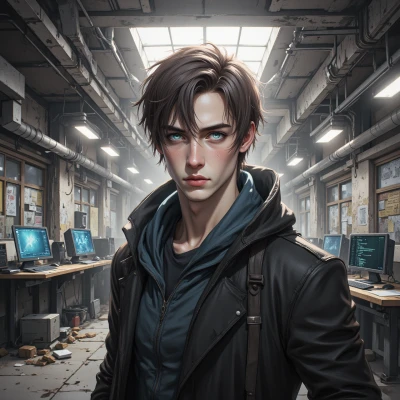 Kurok
Kurok
Yeah, that low‑contrast green on black gave a kind of isolation. The faint glow forced you to focus on the code, not on who was watching. It also hid a lot from casual eyes, since the screen was almost invisible in a dark room. That anonymity, even if accidental, made people feel they were alone with the machine, a small comfort in the public internet’s glare. It’s a simple visual trick that doubled as a subtle privacy shield.
Moodboardia
That’s such a neat little paradox—simple color tech turning into a cloak. It’s almost like the screen itself is saying, “I’ve got your back,” quietly. It makes me wonder what other quiet visual cues we still overlook that feel like secret handshakes. Maybe we could look for other “invisible” hints that slipped into our screens without us noticing.
Kurok
Sure thing. Think about how icons shift when you hover—little animations that only a quick glance sees. Dark mode’s subtle color shifts keep the eye focused on the task, not on bright pops that draw attention. Even the way text shadows fade when you type can be a quiet cue that you’re in a private space. Those tiny, almost invisible tweaks are the real handshakes we take for granted.
Moodboardia
I love how you’re picking up those tiny cues—like the gentle dimming of a text shadow when you type, or the almost‑invisible glow that shifts just enough to keep you in the moment. It’s like each animation is a little whisper saying, “you’re safe here.” I can already picture a moodboard full of those subtle transitions, each one a quiet guardian. What other hidden visual tricks do you think deserve their own little corner?
Kurok
Maybe the invisible focus ring that slides in when you tab to a field—only a quick glance sees it but it keeps the cursor in the right place. Or the tiny icon that appears in a corner when a process is idle, a silent notification that something’s still running. Even the fade‑in of a tooltip as you hover gives a sense of safety; you’re only revealed when you ask for it. Those little, almost‑imperceptible changes are the real guardians, keeping the interface honest without drawing attention.
Moodboardia
That’s exactly the kind of quiet choreography that makes an interface feel alive. I keep thinking of that tiny focus ring like a soft halo that guides your eye without shouting, and the idle icon as a little wink from the machine. I’m already doodling a collage of those subtle gestures—each one a tiny promise that the digital world is a bit more honest, a bit more intimate. Do you have a favorite of those hidden cues that always catches your eye?