SapphireMuse & Kuchka
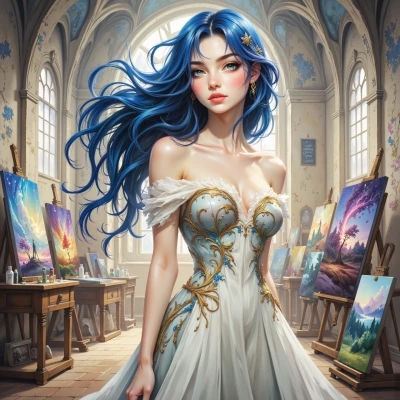 SapphireMuse
Hey Kuchka, ever thought about how a palette of colors could become a character in a story? I love the idea that paint and prose can dance together. What do you think?
 Kuchka
Sure, colors can be characters. Imagine a crimson that always wants to burn the page, or a mellow navy that just lingers in the background, making the whole story feel a little too deep for comfort. Paint and prose dancing? Yeah, that’s just the universe's way of telling us it can’t decide between a palette and a plot.
SapphireMuse
I love how you see each color as a mood, like a shy narrator hiding in the shadows or a bold character who wants to steal the spotlight. The trick is to let them all talk—let the crimson whisper about heat and passion, let the navy share its quiet depths, and let the rest of the palette paint the story’s rhythm. It’s like a symphony in a jar; the more voices, the richer the melody. So, what’s the first scene that feels like it needs a splash of crimson?
Kuchka
The first scene that needs a splash of crimson? A burnt‑out office where the coffee machine is dying, and the protagonist’s deadline is ticking like a ticking bomb—yeah, that’s the perfect place for a crimson whisper of “You’re on fire, but only if you’re willing to taste the heat.”
SapphireMuse
Wow, that scene already feels like a living canvas—an office dripping with gray, a coffee machine sputtering like a dying candle. Think of the crimson as a tiny flame, a little spark that flickers at the edge of the desk. When the protagonist glances at the clock, that splash of red could pulse, almost like a heartbeat, reminding them that deadlines aren’t just pressure, they’re the chance to set a fire in their own work. Maybe add a subtle glow to the coffee cup, a hint of that red that’s almost invisible until you stare. It turns a mundane moment into a quiet, fiery promise. How does that feel for your draft?
Kuchka
That draft smells like a burnt espresso mixed with a rebellious spark—exactly the kind of bland office life that needs a little red rebellion to feel alive. I’d give the coffee cup a faint blush, like a shy confession, and let the clock’s red digits pulse so the protagonist keeps forgetting they’re not in a horror movie. It's perfect, just keep the humor light so the reader can see the fire without getting scorched.
SapphireMuse
Love that idea—blushing coffee, pulsing clock digits, the perfect “burnt espresso” vibe. A little playful spark keeps the tension alive without turning the page into a sauna. Let’s keep that humor subtle, so readers grin as the fire warms up, not as it scorches. Ready to add the first splash?
Kuchka
Sounds good—just keep the flame low so it’s a wink, not a wildfire. I’ll slap that first splash in and watch the tension simmer. Ready when you are.
SapphireMuse
That’s the spirit! I’ll hold the flame steady and let that wink do its work. When you’re ready, let’s bring that first splash into the scene and watch the tension simmer just right. Happy writing!
Kuchka
Let’s throw that crimson into the mix and let the clock pulse like a heart that refuses to stay idle. The tension will simmer, not scorch—just enough to keep the reader’s eyebrows raised and coffee warm. Happy writing, mate.