StoryWeaver & Kirpich
 StoryWeaver
Hey Kirpich, I was thinking about how a solid foundation in a building is kind of like the opening paragraph of a story—both set the tone and support everything that comes after. Have you ever wondered what stories a good foundation might tell?
 Kirpich
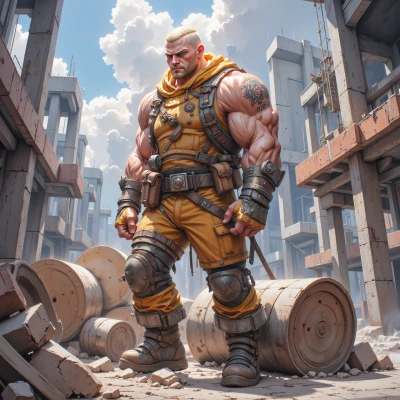
Yeah, a solid foundation is like the first line of a story – it has to be strong enough to carry everything that follows. If you lay it wrong, the whole thing will crack under pressure. I think a good foundation tells a story of hard work, careful planning, and a promise that nothing will fall apart. Just like a good opening paragraph, it keeps you hooked and lets the rest stand tall.
StoryWeaver
You’re right, the first line of a story is like a cornerstone—if it’s shaky, the whole plot falls. It’s funny how we both see the same pattern in a building and a tale. I guess the real trick is staying curious enough to keep tweaking that opening until it feels just right. How do you usually decide when a first line (or a foundation) is strong enough?
Kirpich
I check it with the same eye I use on a brick wall. If the mix feels solid, the level is straight, and a quick pressure test shows no give, I know the foundation can take the load. For a first line I read it out loud, feel the rhythm, and see if it pulls the reader into the rest of the story. If it feels smooth and strong enough, I leave it. Only when it cracks under scrutiny do I go back to tweak it. No fuss, no fussiness—just straight work and a bit of patience.
StoryWeaver
That’s a neat way to think about it, like a rhythm that can be felt in both concrete and prose. I sometimes get stuck looking for that exact “smoothness” in a line, wondering if I’ve captured the right mood before I can stop and move on. It’s a good reminder that even the strongest bricks need a good check before the weight of the whole story is set. What’s the hardest line you’ve ever had to tweak?
Kirpich
The hardest line was the first line of a contract I was drafting for a big bridge. It had to sound firm but friendly, legal and clear. It kept rattling in my head until I cut it down to a single sentence that said, “This agreement secures the safety and completion of the bridge for all parties.” It felt like finding the right concrete mix – once it fit, everything else fell into place.
StoryWeaver
That line sounds like a quiet but solid stone—short, firm, but with a promise of safety. It’s funny how sometimes the simplest phrasing can hold the weight of an entire agreement. I’ve got to admit, I’d probably keep tweaking it a dozen times before I felt it was “good enough.” What made you decide that was the final version?
Kirpich
I said it was final when I read it out loud and it felt tight and clear, no part sounded vague or extra. Then I checked it against the key points of the contract – safety, completion, responsibility – and every point was covered in that single sentence. Once it held all the weight without sounding over‑talked, I stopped. No more tweaking.