DreamCraft & KiraVale
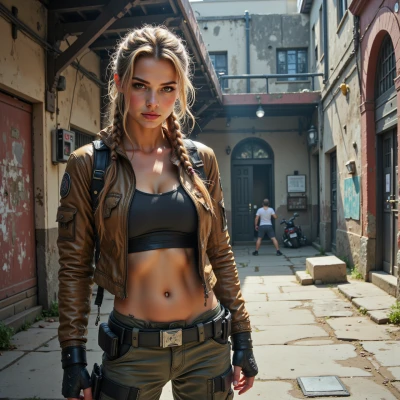 KiraVale
Hey, DreamCraft, I’m working on a set that needs to double as a training arena for my action scenes—think fight choreography, stunts, all that. How would you map out the terrain so it feels believable, functional, and still fits your obsessive detail? Let’s see if your world‑building can give me a solid foundation for the practical side of things.
 DreamCraft
Sure thing. Start with a rough sketch of a central ring—about fifty feet across—where the main action happens. On the inside of the ring lay a padded, slightly sloped floor of interlocking rubber tiles so a hero can fall safely but still feel the impact. Outside that, a 15‑foot wide corridor filled with obstacles: low walls, crates, a rail system that can be moved to alter the terrain for different stunts.
Add a few elevated platforms on the sides—four to be precise—each six feet high. They’re staggered so a fighter can jump from one to another, giving you vertical choreography. Mark each platform with a different texture: rough stone, slick metal, wooden planks—each with its own grip coefficient. This gives the stunt crew instant cues for how hard a landing will be or how much a slip might cost.
On the outer edge, a perimeter wall of 30 feet tall but with a hidden door on one side for quick exits or to let in a crane. Place safety nets in the corners and a discreet pit of water or foam beneath the lowest platform, just out of sight but ready to catch a fall. Keep a sheet of the map on a table—color‑coded zones, numbered sections—so the crew can refer to it in real time. Remember, the detail is the lifeline; the arena should feel like a living training ground, not a stage prop.
KiraVale
Nice layout, but you left out a few key things. The padded tiles need a quick‑swap mechanism so I can change the surface mid‑scene without breaking the rhythm. The hidden door on the perimeter wall should have a latch that releases with a simple lever—no complicated lock, I’ll be in a hurry. And that pit of water? I’d prefer a foam pool that stays invisible when I’m doing a high‑impact fall; water will make the crew wait. Also, put a quick reference sheet on the side of the set, not just on a table—crew need to see it in the heat of the action. Keep the details sharp, but make the practical side as idiot‑proof as the choreography.
DreamCraft
Got it. For the tiles, bolt each section to a sliding rail so you can swap them in 30 seconds—just a quick push on the side and they’re gone. The perimeter door will be a single‑bar latch; a lever on the opposite wall pulls the bar free, no lockwork. The foam pool sits below the lowest platform, but it’s wrapped in a light‑weight canvas that blends into the set’s base, so a jump looks like a normal fall and the crew doesn’t have to wait for a water spill. And I’ll mount a laminated map on the wall adjacent to the set, with a bright orange arrow pointing to the action zone; it’s visible from anywhere on the floor so the team can glance and keep the flow. That should keep the scene moving and the crew happy.
KiraVale
Looks solid, Kira. Quick swaps, easy door, hidden foam—good. Just keep the map color coding tight so we don’t waste time hunting for the right spot. And remember, if you need a spot for a dramatic jump, add a small spring plate under the tile; it’ll give that extra oomph. Ready to run a rehearsal?
DreamCraft
Thanks, just hit me with the schedule. I’ll bring the plates, the rails, the latch lever—everything’s ready to test. Let’s see those jumps in motion.
KiraVale
Alright, here’s the timeline:
9 AM – crew arrives, set‑up check, we run the quick‑swap test for the tiles.
9:30 AM – latch lever demo, make sure the door opens in under 5 seconds.
10 AM – foam pool check: we’ll drop a dummy, confirm no splash, only the canvas layer.
10:30 AM – first jump run‑through: tile swap, platform jump, latch release, foam catch.
11 AM – break, gather feedback, tweak any slip‑points.
11:30 AM – second run, full action sequence, record for the director.
12 PM – final walk‑through, crew signs off, we call it ready. You’re set.
DreamCraft
Sounds perfect. I’ll bring the spring plates ready to slot in when you hit the first jump. Let’s make sure every switch feels smooth and every release is clean. I’ll keep an eye on the timing—no 5‑second lag on that latch, no splash from the foam. Let’s get this arena breathing.
KiraVale
Got it, bring those spring plates in—I'll hit the first jump, lock in the rhythm, and keep the whole thing crisp. Let’s make this arena move.