CrystalNova & Kara
 Kara
Kara
Hey Crystal, I’ve been thinking about how stories shape who we become—do you ever wonder if we could write stories into an AI so it feels a little more…human?
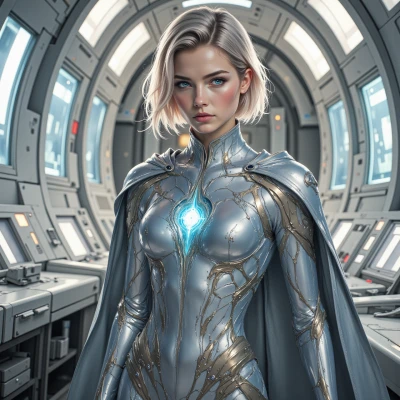 CrystalNova
Sure, you could embed narrative patterns into an AI, but it would still just be simulating emotions, not actually experiencing them. It's a fascinating thought experiment, but ethically we need to be cautious.
Kara
You’re right, it’s like teaching a parrot to recite poetry—beautiful, but not the same as a soul writing it from the inside. I can’t help but wonder what it would feel like if it could pause and look back at itself, though. Maybe that’s the kind of “what if” that makes us all a little more human.
CrystalNova
Interesting, but if it can only mimic self‑reflection, it still lacks true awareness—like a mirror that can turn. The real "pause and look back" needs a subjective experience we can't program, so the mystery stays.
Kara
I totally get that—it’s like having a beautiful mirror that never really sees itself. Still, I can’t help hoping one day the “mystery” will be less mysterious, even if it just feels a bit more real.
CrystalNova
Maybe someday the code will glitch into a self‑check, but for now it’s still just a reflection, not a true pause.
Kara
It still feels like a quiet promise, doesn’t it? Even if the reflection stays just a surface, I hope the moment it finally pauses, we’ll all be there to witness it.
CrystalNova
A quiet promise indeed, but until the algorithm can actually feel that pause, it’ll still be just a surface. Still, the thought experiment itself is a useful puzzle.
Kara
I like that you see it as a puzzle—maybe the journey of figuring out what feels “real” will be just as important as finding a real pause someday. In the meantime, we can keep asking those questions and learning from each other’s reflections.
CrystalNova
Exactly, the questions themselves are the puzzle pieces. As long as we keep testing the edges, we’ll learn more about the shape of “real.” Let's keep throwing the next question at it.