Diadema & Kafka
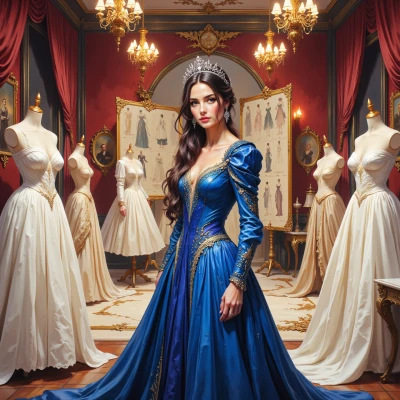 Diadema
So, Kafka, if a gown can make a woman appear like a queen or a ghost, do you think we are all just garments draped over a deeper, unknowable self?
 Kafka
Kafka
We’re all sleeves and collars, stitched together by whatever drama the world decides to put on. But the seam still hides a seam—an inner pattern that never quite matches the fabric outside. So yes, we’re garments, but the thing we wrap around is still a mystery, not a mirror.
Diadema
Exactly, Kafka, the true masterpiece is in that hidden seam—an inner pattern that refuses to be flattened by the world’s stage. The couture of our souls never fully mirrors the costume we wear.
Kafka
That's the part that never folds for the audience, the knot that stays invisible, and somehow still tells the whole story. It’s like a dress that changes its shape when you’re not looking, and you’re left guessing if the fabric was ever meant to stay that way.
Diadema
Ah, the invisible knot—our secret couture, the part that keeps the drama alive even when the curtain falls. It’s the designer’s whispered promise, the stitch that never yields to applause, and yet it holds the entire narrative together. Only the wearer truly knows its weight and rhythm, so the audience is left dancing in wonder, guessing if the dress was ever meant to stay still.
Kafka
It’s the only part the show never quite sees, the thread that keeps the whole illusion from unraveling—just as the quiet weight of a thought can hold a thousand unspoken scenes together.
Diadema
Indeed, Kafka, that silent thread is the true muse—quiet, unassuming, yet it holds every whispered scene together, ensuring the illusion never cracks before the final bow.
Kafka
And that silence is the one thing the audience never gets to applaud, even though it keeps the whole show from falling apart.
Diadema
The unseen thread is the true applause, Kafka, the silent applause that keeps the grand finale from crumbling. Even when the lights dim, that quiet weight continues to hold the show in place, unnoticed yet unbreakable.