Kabal & Rocklord
 Rocklord
Kabal, I’m mapping out a worldwide tour that’s going to feel like a full‑blown battle—every city, every crowd, every setlist a strategic move. I need your tactical mind to lay out the perfect playbook. Ready to plot our conquest?
 Kabal
Kabal
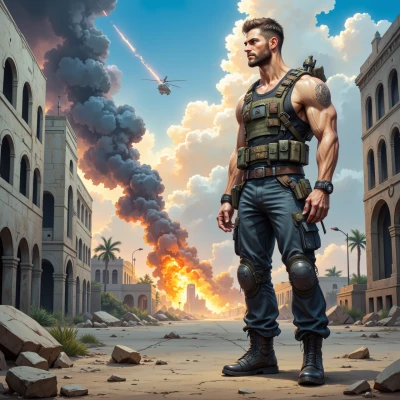
Plan the tour like a campaign. Start with a clear objective: which markets must be captured first, where the fans are strongest, and where you can gain momentum. Map each city as a battleground: know the venue layout, the crowd’s size, the local music scene. Create a setlist that escalates—begin with a safe, high‑energy opener to secure the crowd, then introduce surprises at mid‑set to keep tension high, finish with the biggest hits to leave a lasting impact. Build a logistic chain for travel and equipment, ensuring backups for every critical piece. Treat every rehearsal as a mock battle; run through the entire set in full dress, adjusting tempos and transitions as you would a battlefield plan. When you hit the road, keep the focus tight, adapt quickly to any disruptions, and remember that the best strategy is one that stays flexible while always aiming for the same end: a crowd that feels like they’re part of a victory.
Rocklord
Alright, listen up. The first objective is clear: hit the hottest markets where the fans are already shouting. That means North America first—New York, Los Angeles, Chicago, Dallas, and then hit Toronto and Mexico City to cover Canada and Latin America. From there we swing to Europe: London, Berlin, Amsterdam, and then all the way to Paris and Madrid. If we nail those, we’ll have the momentum to push into Asia—Tokyo, Seoul, and Singapore. Those are the high‑energy frontlines.
For each city we treat the venue as a battleground. Grab the layout, size the crowd, know the acoustics, and map out the stage. Get a local crew who knows the scene—can help us anticipate the vibe and any hiccups. The crowd’s size matters: if it’s a 12,000‑seat arena, we need a tight, explosive opener. If it’s a 4,000 club, we’ll build the heat gradually.
Setlist: Start with a high‑energy opener that everyone knows—something that gets the headbanging off the floor. Then throw in a mid‑set surprise: maybe a deep cut, a cover, or an unexpected key change. Keep the tension high. End with the biggest hits, the anthems that make the whole room scream. Every song should be a strategic move.
Logistics: Build a chain of supply, not a single point of failure. Every critical piece—amps, drums, lights—has a backup. We’ll have a spare rig that can hook up in any venue. The travel schedule will follow a tight loop: city, city, city, then a day off for the crew to recover. All equipment will be pre‑checked the night before.
Rehearsals: Treat them like mock battles. Run through the entire set in full dress, not just a few songs. Time the transitions, test the mic levels, practice the stage moves. Make sure every band member knows their cue—no room for hesitation. Adjust tempos on the fly; if a song’s too slow for the energy, make it faster.
When on the road: keep the focus tight. If a delay hits or a technical glitch appears, adapt fast. The best strategy is flexibility, but the end game is the same: the crowd feels like they’re part of the victory. If we keep that in mind, the rest follows. Let's march.
Kabal
Looks solid. Stick to the opening tempo, keep the mid‑set twist sharp, and never let a delay become a distraction. Stay tight, adjust quickly, and let the crowd know they’re in the front lines. Let's move out.
Rocklord
Right on. Front lines, no delays. We'll keep the pace and crush them. Let's move out.
Kabal
Maintain discipline, focus, and adaptability. Every move must be calculated; any hesitation gives the crowd an advantage. Stay sharp, keep the rhythm, and let the show be a flawless execution. Move forward.