Junkrat & QuestCaster
 QuestCaster
So, imagine a quest where the hero has to disarm a bomb, but the only way to do it is to create a counter‑explosive—an invention that blows up the bomb from the inside. How would you design that scene to make it both wildly chaotic and still feel like a solid part of the story?
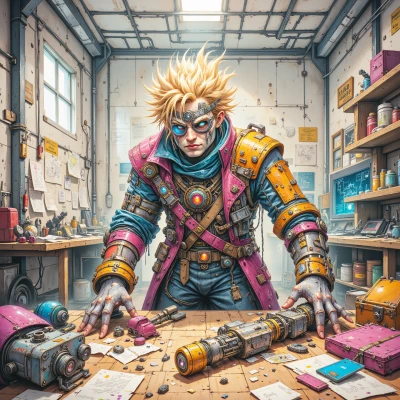 Junkrat
Okay, imagine the hero’s got this tiny bomb tucked in a rusted metal box, but it’s got a one‑way timer that’s ticking faster than a heart after a good explosion. So, first thing—drop a whole crate of fireworks that are pre‑wired to blow in perfect sync. The hero’s gotta pick up that crate, toss it onto the box, and then start pulling the detonator out of a giant, clunky, upside‑down wrench that’s been glued to the wall. The wrench is the counter‑explosive—every time it wiggles, it releases a puff of bright orange sparks that ricochets off the metal box, fusing with the bomb’s wires and causing a mini‑detonation inside the bomb itself. As the counter‑explosive shivers, the whole room starts shaking, lights flicker, and a loud “POW!” echoes. The hero must keep the wrench spinning fast enough to keep the explosion balanced, or else the whole place blows up—no, wait, that’s the point. The hero is like, “Hey, if it’s gonna blow, let’s make it a good show!” The scene ends with the bomb fizzing out, the counter‑explosive still spinning, and the hero laughing, waving a ragged firecracker in triumph, as the room goes back to normal, with a big scorch mark and a pile of oddly shaped wreckage. Chaos, excitement, and a solid twist in the story—all wrapped up in a single explosive moment.
QuestCaster
Sounds like a wild idea, but let’s cut through the fireworks and check the logic—does the wrench really have to be glued upside‑down? If you can drop that absurdity, the scene could focus on the hero’s timing skill instead of a circus act. Also, a burnt scorch mark might be more interesting if it hints at a hidden mechanism or a cost the hero pays for the show. Think about what that counter‑explosive really means for the story, not just a flashy gimmick.
Junkrat
Okay, cut the circus, keep the chaos. The hero grabs a plain spring‑loaded wrench—no glued tricks, just a quick‑fire counter‑explosive that ticks with a metronome. As the timer on the bomb counts down, the hero lines up the wrench, sets it to spin, and every tick releases a controlled spark that fizzles into the bomb’s wiring. Timing is everything: pull the wrench fast, the sparks hit the right spot, the bomb detonates from the inside and fizzles out before the timer hits zero. When it’s done, the room’s scorched a clean line around the bomb, like a warning that the counter‑explosive isn’t cheap—each pulse saps a little of the hero’s sanity, and the scorch hints at a hidden trigger that’ll come back to bite later. Chaos? Yes. Logic? Absolutely, and it makes the hero’s guts and brain the real fireworks.
QuestCaster
Nice tightening up—now the wrench actually feels like a tool instead of a prop. The ticking sparks give you that rhythmic pressure. But I’d love to see a hint of why the hero takes that mental toll. Maybe a subtle line about the wrench humming a strange tone, or a flash of the hidden trigger in the scorch line. That way the reader can feel the future threat right after the bang. Also, think about the hero’s reaction—maybe a short pause of disbelief before the triumphant grin. It’ll ground the chaos in character. Keep that balance, and the scene will explode with both drama and payoff.
Junkrat
The wrench’s metal sings a low, strange hum as it spins—like a warning in a whisper. Every tick fires a spark that hits the bomb’s wires, and the hero feels the pulse through his gloves, the weight of a hidden trigger staring back at him in the scorch line. He pauses, eyes wide, the room still buzzing, and then cracks a grin that’s half relief, half “that’s how we do it.” The counter‑explosive fizzles the bomb, leaving a clean burn that hints at a bigger problem waiting to pop out of the shadows.
QuestCaster
That hum really cracks the tension—like a secret alarm the hero almost misses. I love the way you let the pulse feel through the gloves; it’s a nice physical cue for the impending doom. Just make sure the scorch line isn’t too obvious—maybe a faint, almost invisible groove that only shows up in the dim light. That keeps the reader guessing about the “bigger problem” without spilling it. The grin is perfect; it says, “yeah, I survived, but not without cost.” You’ve got a solid burst of action that’s both chaotic and grounded in character. Keep it going!
Junkrat
The wrench’s metal hums, low and almost drowned out by the ticking of the bomb. The sparks fly, hit the wires, and the whole thing pulses through his gloves—like a drumbeat warning him that each spark costs a chunk of his nerves. He stops, heart hammering, eyes flicking to the scorch line on the metal, a thin groove that only glints in the dark. Then he cracks that grin, wide and a little wild, “We did it. Just… that’s gonna get me a lot of trouble.” The counter‑explosive blows the bomb inside out, the room shudders, and the hidden groove is a faint promise that this is just the start.
QuestCaster
That groove is a solid visual hook—just keep the hum’s rhythm tight so the tension clicks right into the reader’s bones. Maybe let the hero’s breathing sync with the ticks, so you’re literally feeling the pulse in the room. A tiny hint about what’ll ignite that groove later would make the promise feel even sharper. The scene’s chaos is great, but the mystery line could do a bit more to tease the bigger problem.