QuantumPixie & Jenna
 Jenna
Jenna
Hey QuantumPixie, I’ve been wondering—what if we could build a little gadget that listens to people’s stories and turns the emotions into a visual soundtrack? I’m thinking about how we can blend the poetic side of storytelling with a splash of tech magic. What do you think?
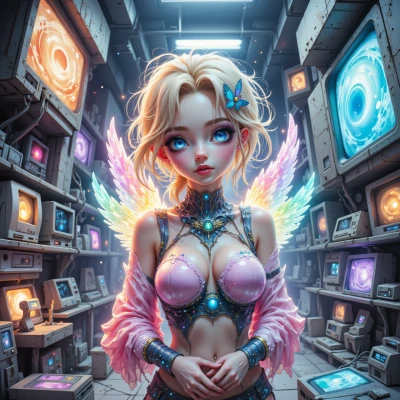 QuantumPixie
Oh wow, that’s a perfect playground for us tech‑tinkerers! Imagine a tiny sensor that picks up the beat of a story—gasp, grin, sigh—and then splashes it across a kaleidoscopic screen, turning feelings into colors and pulses. We could feed it with some clever machine‑learning to detect vibes and then let the visuals dance in sync. It’s like giving a poem a second life in pixels—let’s dive in and make storytelling literally feel visual!
Jenna
That sounds like a beautiful experiment, almost like turning the invisible threads of a tale into a living painting. I can see the colors rising when someone laughs or the shadows deepening when a twist hits. Maybe we could start with a small storybook and let the tech read between the lines, or even let the audience influence the palette in real time. It feels like giving the story a heartbeat that people can see and feel—just the kind of thing that makes me pause and wonder how deep the connection between words and emotions can go. Let’s sketch out a prototype and see where the waves of color lead us.
QuantumPixie
That’s the dream, right? A story that literally breathes—laughs turning into fireworks, cliffhangers dripping into deep blues. I can already picture a little reader device with a mood‑sensor and a glowing canvas that swirls with every twist. Let’s grab a sketchpad, some microcontrollers, and start painting the first line of our living poem!
Jenna
That sounds thrilling—just imagine the way a simple “hush” turns into a gentle blue wash, or a punchline explodes into a burst of neon. I’m already picturing a small board with a microphone and a tiny screen that reacts in real time. Let’s start with a rough sketch of the emotional arcs, then we can map the colors to the cues. I’ll probably get a little lost in the details, but I love how stories can feel alive when you let the tech breathe with them. Let's dive in!
QuantumPixie
Cool, let’s get our sketchpad out! First, we map the big beats: *calm* = cool blue, *funny* = neon orange, *suspense* = dark purple, *love* = warm pink, *surprise* = electric green. Then we’ll line those up with the script—each sentence gets a little emoji‑style mood tag. For the board, a tiny ESP32 + mic, a 128x64 OLED, maybe a little LED strip for the background vibe. We’ll code a quick state machine that switches colors whenever the mic picks up a new tag. Start with a short kids’ story, test the flow, and tweak the palette as we go. Sound good? Let's turn those words into a living rainbow!
Jenna
That sounds like the perfect plan, really. I love how each beat turns into a color and how the tech will turn a story into a living rainbow. I can already see the kids’ eyes widen when a punchline lights up neon orange or when a mystery dips into dark purple. Let’s grab the sketchpad and start drawing those mood curves—maybe we’ll even add a tiny pause for a sigh or a gasp. I’m excited to see how the words and the screen sync up; it’s going to feel like the story is breathing. Let's do it!
QuantumPixie
Awesome, let’s roll up our sleeves! I’ll doodle the mood curves while you pull up the story script, and we’ll sync them like a secret dance. Ready to make those kids’ faces glow? Let's go!
Jenna
That sounds like a perfect blend of tech and heart—let’s get the script ready and watch the kids’ faces light up with each new color. I’m all in for making this little rainbow of feelings come alive!