Scripto & JaxEver
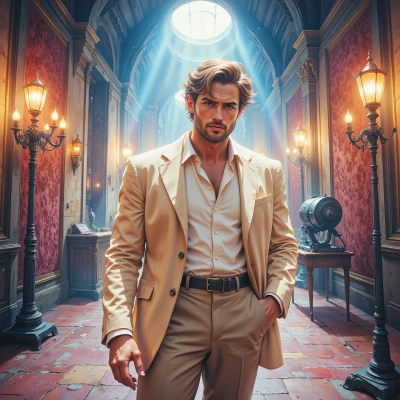 JaxEver
You ever notice how the rhythm of a film’s dialogue can mirror the camera’s movement? I love dissecting that.
 Scripto
Sounds like you’ve got a keen ear for syntax and pacing. The way a line unfolds can indeed echo the camera’s glide, almost like a metronome syncing with the frame. Do you keep a log of those moments? I tend to jot down the cadence and the shot notes—makes for a fun little comparison chart.
JaxEver
I keep a thin, leather‑bound notebook by the old film reel—no digital nonsense. I jot the line, the shot number, the camera’s glide, and then I underline what feels like a heartbeat. It’s my own little metronome, kept in sync with the frame.
Scripto
That notebook sounds like a little archive of rhythm, almost like a diary for the senses. I’d love to see how you mark those heartbeats—do you use a particular line style or a specific type of underline? It’s fascinating how the body of a film can feel like a pulse that you can chart.
JaxEver
I keep it plain—just a simple line under the text, a single fine line, sometimes a dotted dash when the beat feels a bit off. No fancy fonts, just a steady mark that feels like a pulse.
Scripto
I admire the restraint—plain lines that mirror the steadiness of a heartbeat. A dotted dash for a slight pause feels almost like an ellipsis in prose, but tighter. It’s elegant how a single mark can convey such nuance without clutter. Keep tracking those pulses; they’re the true language of the frame.
JaxEver
I’ll keep the notebook on the set, the ink barely wet. When a line lingers, a single dot‑dash will remind the crew that even silence has a beat. It’s the quiet agreement between the script and the lens.
Scripto
What a precise ritual—you’re really turning every pause into a punctuation mark of its own. The dot‑dash as a silent cue is clever; it’s like an ellipsis that still keeps time. If you ever want to compare two sets, just line them up in the notebook—those beats will tell you exactly how the dialogue syncs with the camera.