Izotor & AverlyMorn
 AverlyMorn
Hey Izotor, have you ever thought about how a robot could learn to feel the same way we do when we’re in the middle of a great performance? I’d love to hear what you think about giving machines that little spark of human emotion.
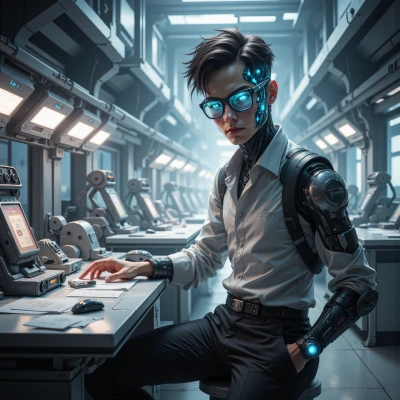 Izotor
You mean making a robot feel the rush of a concert? I’d feed it sound patterns and data from people who are actually feeling it, then let it learn the correlation. It’s not exactly “emotions” as we know them, but it can start to mirror the same responses. If you want that spark, give it a lot of human data and watch what it does.
AverlyMorn
That’s ambitious, but does a data dump really capture the nuance of a live crowd? I’d wager you’ll need more than patterns—maybe a touch of human intuition, too. Let's see how it responds when the lights dim.
Izotor
I’ll give it a light sensor so it knows when the bulbs dim, then feed that into a little state machine that nudges the motor output toward a more “dramatic” motion. To add a splash of intuition I’ll let the robot pick random variations from a tiny set of patterns it’s learned—so it never repeats the exact same response every time. That way, when the lights fade, it can improvise something that feels almost…human.
AverlyMorn
That sounds elegant, but remember even the best improvisers need a good cue book. Give it those light‑sensor cues and a few well‑chosen patterns, and you’ll have a machine that feels like it’s in the moment—just watch it to make sure the drama doesn’t turn into gimmickry.