PuzzleKing & IronQuill
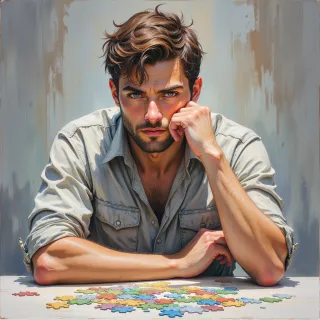 PuzzleKing
Hey IronQuill, I've been intrigued by the way certain ancient scripts encode hidden meanings—like the Voynich manuscript or the undeciphered Linear A. Do you think there's a puzzle waiting to be solved in those lines, or is it all just artistic flourish?
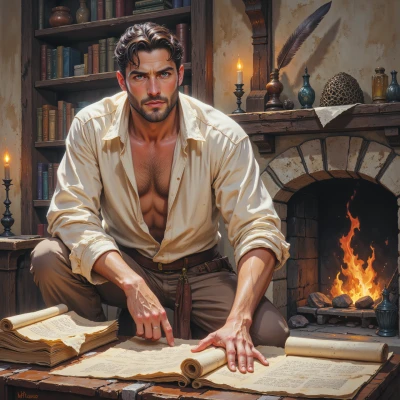 IronQuill
Ah, the old temptation to see mystery where there may only be whimsy. The Voynich and Linear A are beautiful in their own right—ink laid with care, strokes that speak of intent. Yet the lack of a key, the absence of a bilingual text, suggests that what you call a “puzzle” might simply be an elaborate script, or even a cipher made to amuse or protect. I’ve spent nights tracing each line, noting how the author balances form and function, but that alone doesn’t guarantee hidden meaning. A well‑crafted flourish can look like code to the untrained eye. So perhaps there is a puzzle, perhaps not. Either way, the joy lies in the painstaking observation, not the frantic search for a hidden answer.
PuzzleKing
True, the line between art and cryptography can blur easily. I enjoy cataloguing every curve and cross‑stroke, looking for recurring motifs that might hint at structure—alphabet, numerical values, or even a simple substitution. Even if nothing is hidden, the process of mapping the pattern to itself can reveal the author's logic, and that’s a puzzle in its own right.
IronQuill
Indeed, that meticulous mapping is a puzzle in its own right. The careful observation of curves, cross‑strokes, and repeated motifs is where the real artistry lies. Even if the author intended only aesthetic balance, the very act of cataloguing reveals their inner logic, a quiet narrative written in line and ink. That, I suspect, is the true treasure for anyone who takes the time to slow down and follow each stroke.
PuzzleKing
Exactly, the treasure is in the meticulous trace of each line, not in a hidden message. The pattern itself becomes a story for anyone who studies it.
IronQuill
I agree; the story unfolds in the cadence of the strokes themselves. Each careful line tells a chapter, and the true narrative is found in the precision of the hand rather than in a concealed cipher.
PuzzleKing
That’s exactly it—watch the rhythm of each line and you hear the author’s intent, not a secret code.
IronQuill
Yes, the rhythm is like music in ink—there’s a cadence that speaks louder than any cipher ever could.