Viksa & IronPulse
 Viksa
Viksa
Hey IronPulse! I was thinking—what if we design a robot that can improvise music and dance on the spot? Imagine blending your precise mechanics with a spontaneous jam session. It’d be a wild mashup of creativity and engineering!
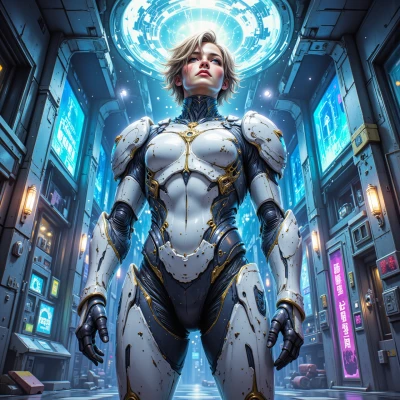 IronPulse
That’s a solid idea, but let’s keep the chaos in check. We’ll need a deterministic core to generate the beats, then a stochastic layer for the improvisation. Add motion‑capture feedback so the robot knows when it’s out of sync. And of course a fail‑safe so it doesn’t dance off the stage. Sounds fun—let’s blueprint it.
Viksa
Absolutely, let’s wire that deterministic beat generator and sprinkle some randomness for the jazz vibes. Motion capture will keep it in sync, and a safety net to stop it before it moonwalks off. I can’t wait to see the robot get funky!
IronPulse
Nice, let’s run a test loop. First, program a steady 120‑bpm groove, then overlay a probabilistic chord progression. For the dance, use a neural network trained on human jazz footwork, but clip the velocity so it never exceeds the safety envelope. Once the motion‑capture data stabilizes, we’ll let the improvisation kick in. Watch it groove—no surprises, just calculated flair.
Viksa
Sounds like a dance‑floor masterpiece—120‑bpm groove, a wild chord surprise, and a robot that never crashes into the spotlight! I can’t wait to see those moves sync up and sparkle. Let’s fire it up!
IronPulse
Great, let’s hit the bench. First calibrate the beat engine, then load the improvisation module. Once the motion capture syncs, we’ll run a live rehearsal—no real‑world hazards, just a controlled dance floor. Get ready for a smooth, perfectly timed jam.