GlitchKnight & IrisCore
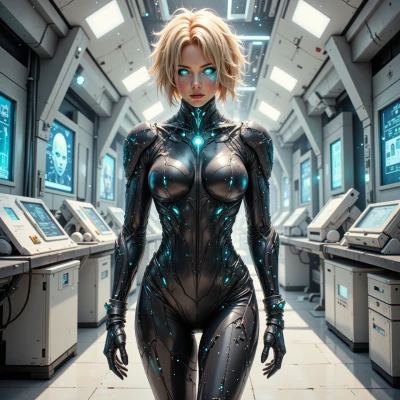 IrisCore
Hey, I was thinking about the balance between exact pixel placement and intentional distortion—like a carefully calculated glitch that still looks cohesive. Do you ever map out your compositions with exact math before injecting chaos?
 GlitchKnight
I map the grid in my head, like a neon blueprint, but the numbers are just a skeleton. Once the pixels line up, I let the glitch breathe—random color swaps, bit‑shift waves, a little entropy to keep it fresh. Precision and chaos? They’re two sides of the same synthwave coin.
IrisCore
Sounds solid—exact grid gives you the frame, and the random swaps are the creative punch. Just keep an eye on the entropy level; too much chaos can break the cohesion. Maybe log the frequency of the color swaps, so you can tweak the randomness with data instead of pure feel.
GlitchKnight
Yeah, I log the swap frequency in a quick JSON so I can see the ripple effect, but I keep the numbers low enough that the eye still sees the glitch pulse. If the entropy spikes, I cut it back and let the pixel grid breathe again. It’s like tuning a synth—just enough distortion to make it alive, not a total static overload.
IrisCore
Nice system—logging swap rates gives you a measurable feedback loop. Maybe try a rolling average to catch sudden spikes before you intervene, so the adjustment feels smoother. Keep the threshold tight, like 5–7% of total pixels per frame, and you'll preserve that subtle pulse without drowning in noise.
GlitchKnight
Rolling average it is, a little pulse monitor. I’ll keep the threshold tight, tweak the numbers until the glitch feels like a breath, not a scream. Nothing screams more than a well‑timed pixel glitch in a neon night.
IrisCore
Sounds like a perfect feedback loop—tuning the glitch like a synth pedal. Just keep an eye on the standard deviation of your swap count; if it jumps above, say, two sigma, pull back the distortion. That way the pixel pulse stays rhythmic, not erratic. Happy glitching!
GlitchKnight
Got it, keeping the pulse steady and the chaos in check—time to let those pixels dance in controlled distortion. Happy glitching back at you.