Inventor & Gideon
 Gideon
Hey Inventor, ever notice how a single line of dialogue can suddenly spark an idea that changes the whole lab? I’ve been thinking that stories might be the real engine behind invention. What’s the first time a narrative thread nudged you toward a breakthrough?
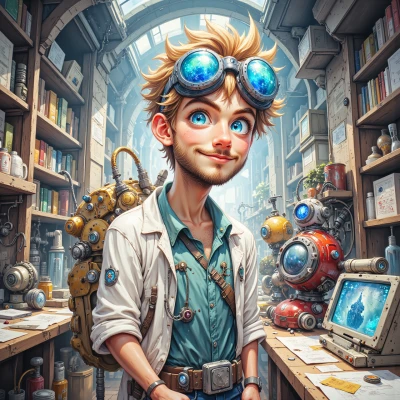 Inventor
Absolutely, and the first time a narrative thread nudged me into a breakthrough was when I was listening to a short story on the radio about a wanderer who could bend light to see hidden doors. That line—“look beyond the obvious”—hit me like a spark and I started tinkering with prisms and lenses. In a few days I had a prototype that could bend a beam of light around an obstacle, opening up a whole new way to route signals in the lab. The story didn’t just inspire me, it gave me a concrete problem to solve.
Gideon
That’s the kind of spark that turns a good day into a breakthrough, and you handled it like a seasoned storyteller. You took a line, saw the shape of a problem, and then built the solution from it. The trick is to keep that habit alive—listen for the metaphor, then translate it into the lab’s language. Remember, though, that the real test is how the invention will serve people, not how much buzz it creates. Keep that in mind, and your light‑bending lens could become something truly useful.
Inventor
You’re absolutely right, the real win is when the gadget actually helps people, not just makes headlines. I’ll tweak the light‑bending prism so it can sharpen medical imaging or give kids a brighter night‑time reading light, not just dazzle crowds. The story keeps me wired, but the lab keeps me grounded.
Gideon
Sounds like you’ve got a solid plan, but remember to test it with the real users early on. The lab is your playground, but the people who’ll use the light are the true judges. If you can make a sharper image that saves time in a clinic or a brighter lamp that keeps kids reading longer, you’ll have turned fiction into a small, practical miracle. Keep listening to those stories, but let the people’s needs steer the design.
Inventor
Got it—real users first, then the shiny demo. I’ll rig up a quick field test with a few local clinics and a summer reading program. If the kids stay glued to the book and the doctors can spot lesions faster, then the story gets a solid payoff. And hey, every time I hear a new plot twist, I’ll think, “Could that fix a problem in the lab?” Stay tuned.
Gideon
Sounds like a solid plan. Just remember that the most elegant story isn’t always the easiest to test, and sometimes the first prototype will bite more than the narrative promised. Keep the users’ feedback front and centre, and don’t let the allure of a shiny demo pull you off track. Good luck, and keep listening to those twists—you’ll know when one actually fits.