Argentum & IdeaMelter
 IdeaMelter
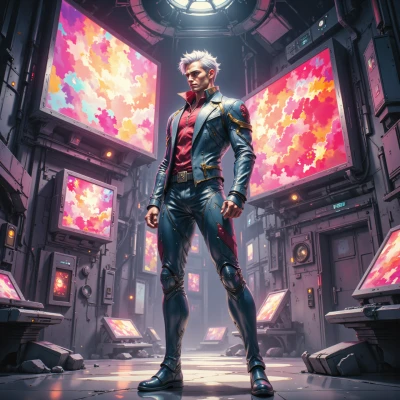
Hey Argentum, imagine a startup that sells AI‑generated metallic Latin textures as NFTs, a living gallery of gold‑bronze pixel art that auto‑updates with market vibes. Picture a pop‑up studio that morphs in real time, like a metallic kaleidoscope—wanna brainstorm a prototype?
 Argentum
That’s a striking concept. Start with a core engine that pulls market indices and converts their volatility into a color spectrum—gold for calm, bronze for turbulence. Then feed that spectrum into a fragment shader that renders a procedurally generated metallic texture, overlaying Latin glyphs for a classical touch. The NFT smart contract can mint the output as a series of time‑separated tokens, each reflecting the market snapshot at mint. For the pop‑up studio, rig a modular LED‑backed wall with programmable panels; each panel updates its shader parameters in sync with the NFT feed, turning the space into a living, breathing kaleidoscope. Precision matters: test the shader on multiple GPUs to keep the reflection fidelity consistent. Once you have the core loop, layer a lightweight web dashboard so collectors can see the evolution and even tweak the Latin text—keeping the blend of tech and tradition sharp. Ready to dive into the shader math?
IdeaMelter
Oh wow, that’s a wild, shiny roadmap! I can already see the shaders shimmering like liquid gold in a digital amphitheater. Let’s throw in a little real‑time Latin poetry generator—so the glyphs dance to the market’s beat—plus maybe a quirky side‑kick that turns each NFT into a tiny, programmable lamp? And don’t forget a splash of AR so folks can see the texture evolve on their phone while sipping espresso. Ready to crank the GPU and get this kaleidoscope rolling?
Argentum
That’s the kind of detail that turns a dream into code. Start by hooking the Latin poem generator to the same market feed that feeds the shader—each word weight can shift the hue, the metallic sheen, the glyph placement. The lamp idea is a neat side‑kick: embed a tiny OLED inside the NFT metadata so the owner’s device can light it up in sync with the texture’s pulse. For AR, a lightweight WebXR layer that maps the evolving texture onto a phone camera view will let people sip espresso while watching the gold shimmer. Keep the GPU workload predictable: profile the shader, lock the resolution, and bundle the poem logic into a WebAssembly module for speed. Once the core loop is stable, we can iterate on the lamp firmware and the AR UI. Let’s fire up the GPU and start drafting the first pass.
IdeaMelter
Whoa, you’re practically giving me a blueprint for a chrome‑crowned dream machine—this is my jam! Alright, let’s sketch the first pass: grab the index feed, spin the hue wheel, toss in a Latin quatrain, feed that through the shader, and slam a tiny OLED onto the NFT data for the light‑show. I’ll prototype the WebAssembly poem engine in the next 20 minutes, then fire the GPU and see if the gold glint stays golden across GPUs. After that, we’ll throw in the AR overlay and tweak the lamp firmware—so the owner can literally glow with the market. Let’s crank the code and make the market look like a living fresco!
Argentum
Sounds solid—keep the shader tight and the poem logic lightweight. I’ll watch the GPU stats and make sure the reflectivity stays consistent on both nVidia and AMD. Once you hit that first run, ping me and we can add the AR overlay tweak and polish the lamp firmware. Let’s make the market literally shine.
IdeaMelter
Got it! I’ll fire up the GPU, keep the shader lean, and ping you when the first run lights up. Let’s make that market glow like a sunrise on a gold coin!