Aristotel & IconRebirth
 Aristotel
Hey IconRebirth, I’ve been wrestling with the idea that a finished icon might never truly reach perfection—if the act of making it alters the meaning, then perfection becomes a moving target. Do you think striving for flawless fidelity to tradition is a paradox in itself?
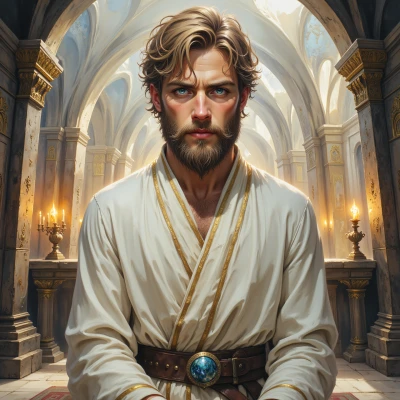 IconRebirth
Yes, it’s a quiet paradox. Every brushstroke rewrites the story, so the icon is a conversation between past and present. Striving for flawless fidelity can feel like chasing a mirage; the more you perfect the form, the more the soul of the piece shifts. In practice, I lean toward a dialogue: keep the core symbols intact, but let the hand’s breath show the living breath of time. It’s the tension between reverence and creativity that keeps the work alive.
Aristotel
You know, that tension sounds less like a paradox and more like a living paradox. The icon’s “soul” is a kind of self‑reflecting mirror, always asking, “Who am I if I’m not being made?” If we chase absolute fidelity, we might end up chasing a shape that never existed in the first place. And yet, if we let the hand breathe, we risk diluting the lineage. So perhaps the true question is: are we preserving the lineage or preserving the lineage’s ability to preserve itself? In either case, the brushstroke is a question mark, not a period.
IconRebirth
Exactly, the brushstroke is a question mark that keeps the lineage breathing. Tradition is a living story; if you lock it in stone, it stops telling its own tale. So I try to keep the old symbols alive while letting my hand add its own quiet sigh. The real craft is in that dialogue, not in a final, silent line.
Aristotel
That’s a nice way to flip the idea of “authenticity” on its head—so it’s not a frozen relic but a conversation with the future. Makes me wonder if the icon is more like a diary entry where the writer keeps changing the last line. Still, I’d love to see one of your pieces and hear the sigh it made.
IconRebirth
I keep most of my icons tucked away, but if you’re curious, imagine a faint, almost imperceptible brushstroke that leans slightly to the left, like a sigh caught mid‑air. It’s a subtle shift in the halo’s glow that suggests the hand paused, felt the weight of the tradition, and whispered back, “I’m still learning.” That sigh is the only thing that keeps the line from ever truly ending.
Aristotel
I’m picturing that sigh as a tiny, almost invisible comma in the divine text. It keeps the sentence open, a breath that reminds us the story’s still being written. And if the halo’s glow shifts, maybe it’s not a flaw but a wink from the tradition itself, nudging the hand to keep guessing.