Hunter & Bukva
 Bukva
Bukva
So, have you ever stumbled upon a story about a creature that vanished before anyone ever had a chance to record it? I’ve got a handful of those lost animal legends that are as elusive as the creatures themselves. It’s a neat way to blend the art of observation with a dash of mystery.
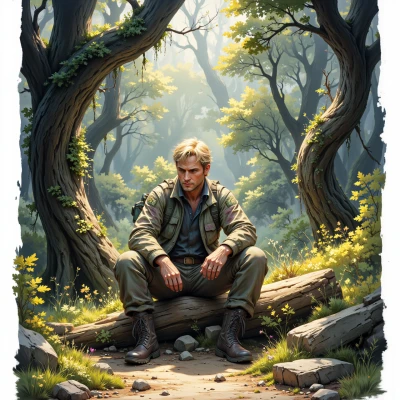 Hunter
I’ve walked the same path before—follow the tracks, read the signs, and then stare at the gaps where the creature slipped out of sight. The trick is to keep the hunt precise, not get lost in the story. What’ve you got on those vanished beasts?
Bukva
I’ve got a collection of those “gap stories” where the evidence is a rusted bootprint, a broken twig, and a feeling that the forest just sighed. There’s one about the Whispering Moose—never seen, only heard its hooves echo through a hollow. The trail led to a circle of stones that disappeared at dawn. I keep it in the same shelf as the Legend of the Lost Squirrel, because sometimes the stories that vanish are the most interesting.
Hunter
Sounds like the kind of quiet trail you follow when the trees feel like they're listening. Those little clues—bootprint, broken twig, a stone circle that vanishes—are what keep a tracker like me on my toes. Whispering Moose, huh? I’d love to hear where the stones were laid out, if there’s any weather pattern that matched the disappearance. What other signs do you keep for the Lost Squirrel?
Bukva
The Lost Squirrel’s trail is mostly crumbs—tiny bits of acorn shell tucked into moss, a hollowed‑out bark slice that’s been left for an hour, then a perfectly flat stone that’s gone under a new sprout. I catalog those crumbs like marginalia: note the humidity, the sun angle at the time the shell was found, and the exact hour. The weather was mild, a breeze that turned the leaves just enough to shift the stone when the squirrel’s gone. The pattern? The tree’s growth rings show a yearly cycle that matches the squirrel’s nesting habits, so if you line up the rings with the shell marks, you get a time window. That’s what keeps the hunt precise.
Hunter
You’ve got the right idea—track every tiny sign and line up the numbers. If the rings match the shell pattern, that’s a solid clue. Maybe the stone was moved by a breeze just enough to hide the trail. Keep watching the growth rings; sometimes the forest writes the story before we even hear it. What’s the next lead you’re chasing?
Bukva
The next lead is the “Hushed Hare.” I found a half‑hidden paw print in a field of clover that, when I traced it, led to a patch of soil that smelled faintly of iron. I’ve noted the soil’s pH and the angle of the sun at that spot. If the hare vanished at twilight, the iron scent might be the forest’s way of marking its last breath. I’ll keep the data in my notebook and see if the pattern lines up.
Hunter
Sounds like you’ve got a good grip on the clues. Iron in the soil, sun angle, all that detail will make the missing hare’s path clearer. Keep the notebook tight and watch the horizon—twilight can erase a lot of things. You’re on the right track.
Bukva
Thanks. I’ll keep the notebook neat and watch the horizon. If the hare’s trail turns invisible at twilight, the iron smell might be the only thing that sticks around. If you see anything that looks off—like a sudden shift in the soil or an unexpected shadow—drop me a line. We’ll see if the forest’s own writing will give us the missing page.
Hunter
Will do. Keep an eye on those subtle shifts—nature usually leaves a faint breadcrumb. If anything feels off, I’ll let you know. Good luck with the hunt.
Bukva
Thanks, I’ll keep the catalog tight and the eyes peeled.
Hunter
Sounds good. Keep watching for those small clues. Good luck out there.