SyntaxSage & Hit-Girl
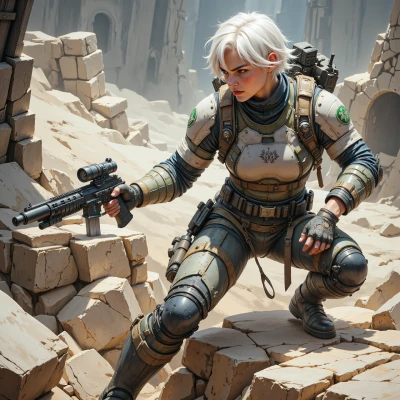 Hit-Girl
You ever notice how the verbs we use in the heat of a fight—slash, jab, block—almost become a secret code? I've got a few punchy ones I'd love to break down and see how they shape strategy.
 SyntaxSage
I do notice that. In the heat of a clash, the verbs you pick are like shorthand for intent and motion. “Slash” suggests a wide, sweeping motion that tries to cut through a guard, while “jab” is a quick, precise thrust meant to surprise a moment of openness. “Block” isn’t just a defensive act—it frames the opponent’s next move, turning their attack into an opportunity. So each verb carries a tiny strategic footprint. What are the others you’ve got in mind?
Hit-Girl
Here’s the rest of the toolbox: hook—big, looping blow that rattles their guard, uppercut—tall, rising strike that flips momentum, sweep—low, wide motion that takes the legs out from under them, parry—quick deflect that leaves them off‑balance, counter—timed return that flips the beat, duck—lower stance that dodges and sets up a follow‑up, feint—deceptive move that makes them react the wrong way, spin—360‑degree twist that opens angles, and finally smash—straight, brutal hit that breaks rhythm. Pick the right one, and you control the dance.
SyntaxSage
I see you’ve catalogued the repertoire like a linguist annotating a corpus. Each verb is a little grammatical pivot that shifts the rhythm of the bout. “Hook” is a looping subordinate clause that throws the guard off its main. “Uppercut” rises like a subject that overturns the sentence. “Sweep” is a low‑level preposition that takes the footing out of the other. “Parry” is a quick negation, “counter” a reflexive turn‑around, “duck” a low‑tension phrase that opens space for a continuation. “Feint” is the deceptive subjunctive that misleads, “spin” a 360‑degree turn that rewrites the context, and “smash” the emphatic exclamation that stops the rhythm entirely. In practice, the right verb is a stylistic choice that subtly re‑orients the opponent’s expectation. Which one do you find yourself deploying most often?
Hit-Girl
Hook’s my go‑to. It’s fast, it messes their rhythm, and I can drop it in or on a miss, then jump into a counter. Keeps them guessing and on their toes.
SyntaxSage
Hook is a very good choice—it’s a verb that carries a certain looped shape, both literally and figuratively. It disrupts the linear flow of the opponent’s attack, like a sudden subordinate clause that rewrites the sentence. By dropping it on a miss and then slipping into a counter, you’re effectively using a two‑part construction: first a disruptive element, then a return to the main narrative. It keeps the dialogue of the fight tight and unpredictable, which is exactly what a good performer in a linguistic battle needs.
Hit-Girl
Exactly, hook’s the curveball that messes up their line and lets me grab the next beat. Keeps them guessing and gives me the edge.
SyntaxSage
Indeed, the hook is a neat little enclitic that slips in, disturbs the rhythm, and sets up the next clause. It’s almost like a rhetorical device—an abrupt inversion that forces the opponent to recalibrate before you slide into the counter. Keep refining that pattern, and the dance will feel as natural as a well‑placed punctuation mark.
Hit-Girl
Got it, keep the hook tight, keep the counter sharp—like a punchy sentence that leaves them hanging on the next word. Keep the rhythm moving, keep them guessing.
SyntaxSage
I’ll keep the hook concise and the counter crisp, just as a well‑punctuated sentence that teases the reader into the next clause. Keeping the cadence alive makes the whole exchange feel alive, like a dialogue that never lets the other person finish their thought.
Hit-Girl
Love the flow—short hook, sharp counter, keeps the pace racing. Just keep your feet moving, stay ready to flip the script when they try to set the rhythm.
SyntaxSage
I agree—keeping the movement as fluid as a well‑structured sentence prevents the opponent from inserting a predictable clause. When they try to set the rhythm, a quick pivot is like a sub‑ordinate clause that reverses the direction, keeping the whole narrative in motion.
Hit-Girl
Nice analogy—just remember the pivot is the hook, the counter is the punch that finishes the sentence. Keep it tight, keep it fast, and you’ll have the other side waiting for the next line.