Hermione & Lusya
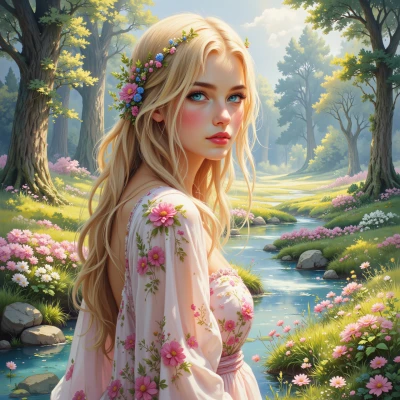 Lusya
Lusya
Hey Hermione, I was watching a bunch of leaves today and noticed how their veins almost follow this kind of tiny repeating pattern—kind of like a secret code nature writes. Have you ever found something like that in your research?
 Hermione
That's fascinating! Leaves often show beautiful, repeating patterns—think of how veins branch like a tiny tree, or the spirals that follow the Fibonacci sequence. I’ve read about how these patterns help optimize light capture and water transport. Maybe you’re spotting a subtle fractal or a hidden symmetry? If you want, we could sketch it out and see if it matches any known botanical patterns.
Lusya
Wow, that sounds really cool—maybe we could draw a simple diagram together. I like when the tiny details line up, like a tiny map of a forest inside a leaf. If you’re up for it, let’s pick a leaf, trace it, and see if the pattern whispers the same story I hear. It might be fun to see where the math and the nature meet.
Hermione
That sounds delightful! How about we pick a classic maple leaf? It’s got a clear, repeating lobe pattern that’s almost like a tiny map. Grab a piece of paper, trace the outline, and then follow the veins inside—just see how the branches split symmetrically. Once you’ve drawn it, we can sketch the mathematical grid over it and compare the two. It’ll be a neat mix of art and numbers!
Lusya
That sounds lovely, I love a good maple leaf. I’ll grab a piece of paper, sketch the outline, then follow the veins. When I line up a little grid on top, I’ll see if the shapes line up with any math pattern. Let’s see what tiny world we uncover.
Hermione
That sounds like a perfect plan—just imagine the hidden geometry unfolding before your eyes! Let me know what you discover, and we can dive into the math behind those delicate veins together.
Lusya
Got it, I’ll get on it and let you know what I find. This is going to be fun!