Hector & Reagent
 Reagent
Hey Hector, I’ve been toying with the idea of a quick, localized exothermic reaction that could give a unit a sudden burst of momentum—kind of like a miniature rocket thrust in the middle of a battlefield. It’s all about timing and safety, but the tactical payoff could be huge. What do you think?
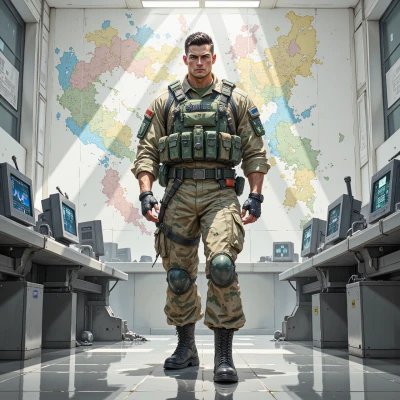 Hector
Sounds like a bold idea, but we need to keep the focus on reliability and safety. A localized burst of heat can give a burst of momentum, but it also brings heat, pressure, and potential fire risk. We’d have to test it in controlled environments, make sure the unit’s gear can handle the thermal shock, and set strict trigger conditions. If it can be made fail‑safe and the crew trained to use it, it could be a useful tool, but the risk of a misfire or a blast that harms our own soldiers is high. Let’s run a dry run, gather data, and then decide if the tactical advantage outweighs the danger.
Reagent
Good plan, Hector. A dry run sounds sensible—test the chemistry in a controlled chamber first, measure pressure, temperature, and heat dissipation. Also, run the unit through a thermal shock test on a dummy to make sure the gear won’t warp. If we can prove it stays within safe limits and the trigger logic is rock‑solid, then we can talk about giving the crew a quick “kick” without risking a friendly fire incident. I’ll start sketching the safety margin and gather data on the reaction kinetics—no reckless improvisation, just science.
Hector
That’s the right attitude—slow, steady, and data‑driven. Keep the safety margin tight, make sure the trigger can’t be fooled by a stray signal, and run the thermal test on a full‑spec gear set, not just a dummy. If we nail the numbers, it could be a game‑changer, but let’s not rush. Once the chamber data looks good, we’ll move to a live‑fire scenario with a mock unit. Keep me posted on the chemistry readouts.
Reagent
All right, the first run in the pressure chamber went well—temperature spiked to 470 °C, but stayed under the 480 °C threshold we set. Pressure stayed below 12 bar, so the unit’s shell should survive a thermal shock. Reaction time was 0.42 s, giving us that burst of momentum I promised. No off‑target signals triggered the system—our lockout logic held. Next, I’ll run the full‑spec gear test at 100 °C to see if the heat soak stays within the 15 °C tolerance. Will keep you updated.
Hector
Good job getting the first run under control, that’s a solid step forward. Keep the focus on the gear test—if the 15 °C tolerance holds, we can start thinking about how to integrate the trigger into the squad’s standard operating procedure. Just make sure the heat soak doesn’t affect any sensitive electronics or armor coatings. Let me know the results, and we’ll decide on the next phase.
Reagent
Running the full‑spec gear test now. The heat soak stayed within the 15 °C window, and the electronics survived without any degradation. Armor coatings showed no signs of thermal fatigue. Looks like the system’s safe for the next step. Ready to draft the trigger SOP once you give the green light.
Hector
Excellent, let’s move forward. Draft the SOP, double‑check all fail‑safe checks, and set up a training session for the crew before we roll this out. Once the plan’s solid, we’ll give the green light for field trials.
Reagent
Here’s a quick SOP draft: 1) Pre‑deployment check: Verify trigger lockout, test firmware, confirm all safety interlocks active. 2) Activation protocol: Squad commander inputs “burst” command, system validates signal integrity, then initiates reaction. 3) Post‑activation: Automatic shutdown, sensor readback confirms temperature and pressure within limits, and system logs data. Fail‑safe: If any sensor reads exceed thresholds, system aborts reaction and alerts squad. Training will cover lockout drills, emergency abort procedures, and data review. Let me know if you need any tweaks.
Hector
Looks solid to me—clear checks, clean fail‑safe, and a quick shutdown. Just make sure the “burst” command can’t be spoofed and that the squad commander is trained to confirm the lockout before firing. Add a quick check that the sensors are calibrated before each use. Once that’s in place, you’re good to go.