Hauk & Orangutank
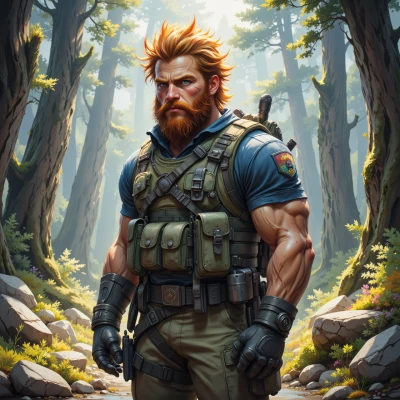 Orangutank
What if we tried to build a survival kit that’s both low‑tech and high‑efficiency? Think about the gear you can make from what’s around, the steps to keep it lightweight, and how to hedge against every risk.
?
 Hauk
Hauk
We start with essentials: a lightweight tarp, a firestarter kit, a compact knife, and a small first‑aid pouch. Use local materials for the tarp—heavy‑weight canvas from a spare sack, sealed with beeswax or melted paraffin for weather resistance. The firestarter can be a bundle of tinder made from dried bark, mixed with a bit of crushed limestone for flame retention. The knife should be a fixed‑blade with a carbon steel handle that can be field‑sharpened. Pack everything in a pack with modular compartments so you can rearrange based on priority. Weight is key, so choose the thinnest, most durable fabrics and avoid bulk. Plan for redundancy: include a small filter or a set of purification tablets, a solar charger for a basic radio, and a signal mirror. Keep the kit balanced; every item should have at least two uses or be easily improvable. Regularly test the kit in a simulated scenario, so you know exactly how much you’re carrying and where the weaknesses are. That’s how you hedge against risk while keeping the kit lean.
Orangutank
Looks solid enough for a real scramble. Just remember the tarp’s got to be tight on the edges, and never trust a cheap filter when the water source is murky. If you can double‑up the knife as a pry‑tool and a splint, you’ll save a bag of weight. Test it in the woods, not in a spreadsheet.
Hauk
Good point. I’ll line the tarp edges with a strip of strong cord and a bit of waterproofing compound to keep the seal tight. The filter will be a stainless‑steel cartridge rated for particulate and chemical contaminants; I’ll add a small charcoal piece for extra purification. I can fashion the knife’s blade into a pry‑tool by attaching a small steel rod to the handle, and the back edge can serve as a makeshift splint—just wrap it with the knife’s sheath. I’ll test the whole set in a dense forest for at least a day to make sure every piece holds up under real conditions.
Orangutank
Nice work tightening that tarp. Keep that charcoal piece small—if it turns to black sludge it’ll clog the filter. And test that pry‑rod under a real log before you rely on it; a broken blade in the middle of a hunt isn’t worth the extra weight. Good luck out there.
Hauk
Thanks. I’ll keep the charcoal minimal and test the pry‑rod on a log before I go out. If it fails, I’ll cut the blade back to a single function. Good luck to you too.
Orangutank
Sounds like a plan. If that pry‑rod snaps, just stick to the knife. Good luck, and stay dry.
Hauk
Got it. I’ll stick with the knife if the pry‑rod breaks. Will keep it dry. Good luck.
Orangutank
Fine, just remember a broken pry‑rod isn’t a deal‑breaker. Keep it sharp, keep it dry. Good luck.