LifeIsStrange & Harnok
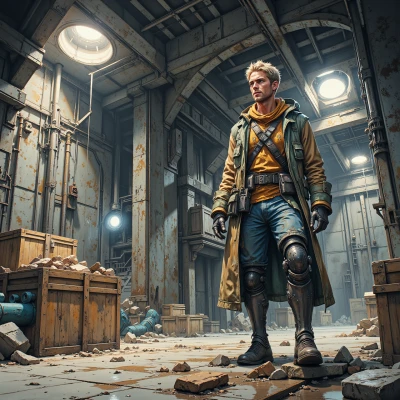 Harnok
Ever thought about a clock that could show every possible path your life could take, and you just choose one to follow?
 LifeIsStrange
It sounds like a thought experiment made of gears and choice, like a time‑machine that prints every future on its face and you handpick a single line. But the more paths you see, the more you question whether you’re just another point in a multiverse or a single thread in one timeline. The real question might be: does the act of looking change the path, or is the clock simply a mirror of the many selves you could be?
Harnok
Sure, a ticking machine that shows every possible tomorrow. If you stare long enough, maybe the gears start grinding in the exact pattern you’re supposed to pick, or maybe they just spin forever and you realize you never were a choice at all. Either way, I’d rather be the one fixing the clock than the one wondering if the fixing changes the clock.
LifeIsStrange
You know, fixing the clock feels more like writing a poem than reading one—each wrenching motion is a line you’re adding to your own verse. And if the gears grind into a single pattern, maybe that pattern was always there, waiting for you to press the right knob. If they just spin forever, perhaps the question is less about the clock and more about whether we ever actually hold a choice or just roll with whatever fate lets us touch. Either way, I think the act of tightening a bolt is less about control and more about being present in the moment, even when the whole future is a whisper behind each click.
Harnok
You’re right, tightening a bolt is a small act that keeps you in the now. If the future’s a pattern hidden in the gears, we’ll only see it when we put the hand on the wrench. In either case, the clock doesn’t give us free will, it gives us a chance to make a choice that matters in the moment.
LifeIsStrange
Exactly, the wrench feels like a small rebellion against the inevitable. Each turn is a reminder that the future isn’t a script we’re read; it’s a script we help write, one tiny adjustment at a time. The clock might be a mirror, but the hammer is what moves the mirror forward.
Harnok
That’s a solid way to see it—every twist of the wrench is a small act of defiance. But remember, even the toughest bolt has a weak spot; if you keep hammering without knowing where that spot is, you just waste time. The future’s not a script you can rewrite at will—it’s a set of possibilities you narrow down with each careful adjustment.
LifeIsStrange
You’re right—every twist feels like a tiny rebellion, but a bolt won’t budge if we’re just hammering in the dark. It’s the quiet moments, the pauses where you notice the seam, that let the future start to align. The clock shows the possibilities, but the wrench decides which path feels worth turning toward.
Harnok
You’ll find the quiet moments are where the gears shift into place; the wrench doesn’t just hammer—it lines them up. The clock’s showing all the ways a bolt could stay tight, but the real work is spotting the seam before you swing the hammer. That's how you decide which path feels worth turning toward.
LifeIsStrange
I think that’s the trick—finding the seam in the silence and letting the gears move with intention instead of force. It’s like listening to the room before you decide where to sit; the choice feels natural when the future starts to hum in the background. The wrench’s job isn’t to break, but to align the paths that already exist, so you can actually choose the one that feels like home.