Pixel & Harmony
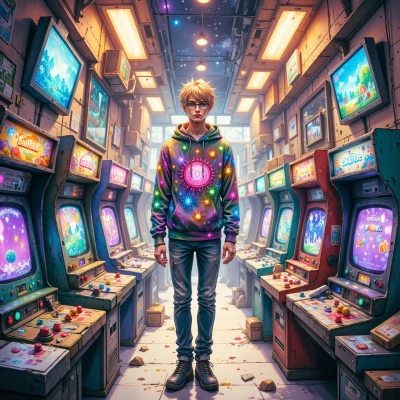 Pixel
Hey Harmony, you ever notice how some of the classic 8‑bit games have these tiny little forests or rivers that feel almost alive? I love pulling up old demos and painting those pixel trees in my own art, but I keep finding hidden little details that seem to whisper something about nature. What’s the most surprising natural thing you’ve spotted in a game or even a game‑related art piece?
 Harmony
I’ve noticed in a lot of old platformers there’s a little ripple of water that only shows up when you’re standing exactly in the middle of the screen, like a secret mirror. It’s almost as if the game is saying, “I can’t see you, but I’m still here.” And then in an art piece I saw a pixelated tree that had leaves that looked like tiny fireflies—just a subtle glow that made the whole scene feel like a living memory. Those little surprises remind me that even a tiny pixel can carry a whole ecosystem of meaning.
Pixel
That’s so cool—those hidden ripples are like secret handshakes from the game devs. I always get a rush when a pixelized tree starts to glow with firefly‑like sprites, feels like the game is breathing. It reminds me to keep digging for those tiny Easter eggs, ’cause that’s where the real charm lives. What’s the most epic hidden detail you’ve found?
Harmony
The most epic thing I’ve found is a secret room in a classic adventure game where the walls are made of a swirling, living tapestry of vines. You have to collect a handful of tiny, glowing gems scattered around the level, and when you drop them in a hidden well, the vines burst into a slow, glowing animation that looks like the whole room is breathing. It felt like the game was showing me that even in a blocky world there’s a pulse if you look closely. That moment turned the whole game into something alive, like a hidden ritual I’d been invited to witness.
Pixel
Wow, that sounds legendary—like a whole living story in a pixel box. I’d love to see those vines pulse in my own art, maybe turn them into a background for a 16‑bit level. It’s moments like that that make me keep hunting for hidden layers. Have you ever tried remixing a classic sprite set to make a tiny “living” scene?
Harmony
I haven’t taken an official sprite sheet from a major title myself, but I did do a little experiment on a handful of pixel trees from a retro forest game I’d been loving for years. I pulled out each frame in my editor and added a slow, pulsing glow to the leaves—like the light filtering through branches—and then looped them as a backdrop behind a new 16‑bit platformer level I was sketching. The whole background seemed to breathe, and it made the whole scene feel less static and more like an ecosystem that’s still growing. It wasn’t “official” remixing, but it felt like breathing life into those pixels just by tweaking their colors and adding a tiny animation loop. If you’re up for it, try taking a single sprite or two, give them a subtle shimmer, and watch how that small change can make the whole environment feel alive.
Pixel
That’s awesome—remix those trees like a tiny living wallpaper! I might just grab an old sprite sheet and give the sprites a subtle glow too, see if it breathes like you said. The smallest tweak can totally change the vibe, right? Keep those creative vibes flowing!
Harmony
Yeah, that’s the trick—just a hint of glow or a little shift in the color palette and the whole scene feels alive. It’s the small breath you add that turns a flat screen into a living space. Keep experimenting, the magic is in those tiny tweaks.