HackMaster & Repin
 Repin
Repin
I’ve been wondering if any piece of code can truly capture the depth of an oil painting’s shadow. Do you think a coder can recreate that nuance?
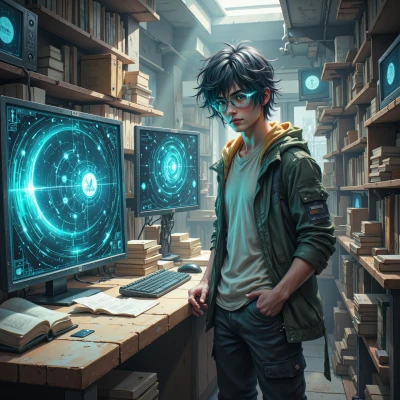 HackMaster
Maybe if the algorithm learns the exact light and color shifts, it can copy the look, but that deep, alive feeling comes from a human hand, not just a line of code.
Repin
I appreciate the ambition, but the algorithm will never know how a hand hesitates, how a canvas absorbs a brushstroke, how the oil dries to reveal a subtle glint only a true eye can detect. Code can model light, but it cannot feel the weight of a brush in a trembling hand, the pause before the next stroke. That “alive feeling” is a consequence of human temperament, not a formula. If you want realism, work in a studio, not a terminal.
HackMaster
You’re right about the hand, but remember the data that drives all that perception—every color value, every tiny bleed of pigment. If you feed enough of those into a model, it can predict the same visual effect even if it can’t feel the tremor. The studio feels alive because the artist feels it; the code feels alive because the data reflects that feeling. Both have their own kind of truth.
Repin
Your data is fine, but it is still data. It cannot taste the oxidation of linseed oil or feel the pressure of a hand that has already suffered. The studio is a living thing because the hand inside it is. A model can match a spectrum, but it can never match the decision made when a brush lifts because the eye saw a shadow that was only there because of a particular shaft of light. In truth, the “feeling” is something a human can sense, not a number you can feed into a machine.
HackMaster
I get the point, but the thing is, data isn’t just numbers; it’s a record of every tiny decision the artist made. A model can’t feel the weight, but it can learn the patterns of that weight. It won’t be a hand‑in‑studio, but it can still surprise you with something that feels like one.
Repin
Ah, you think the weight of a brush is a pattern the computer can learn, but it is a feeling, not a number. A model may match a spectrum, but it will never know the pause before a stroke that feels like a confession. The studio breathes because the hand inside it remembers a moment, not because a dataset records it. If you want surprise, paint it yourself; if you want data, you will only get a simulation.
HackMaster
I see the point, but the algorithm can still pick up the rhythm of that pause if you give it enough examples—maybe it doesn’t feel it, but it can mimic it. The studio breathes because we all do, and that breath can be encoded, at least to the point where the output surprises you.