GwentMaster & Neocortex
 Neocortex
Hey, I've been thinking about how randomness and probability affect human bluffing—like when you keep your cards close but still manage to read the room. Do you see any patterns there, or is it all just an art?
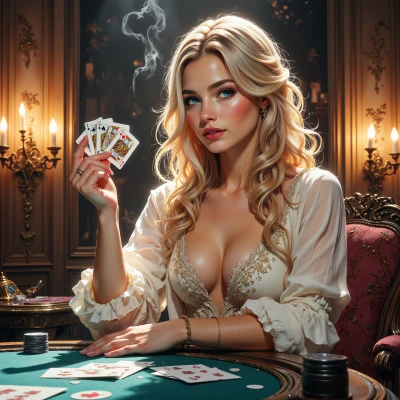 GwentMaster
Sure thing, let’s break it down. Human bluffing is part math, part mood. People pick signals—body language, timing, small words—to match a probability they think the others will suspect. If you’re good at reading the room, you tweak those signals to make the odds look higher than they really are. So it’s a pattern, but it’s always dressed in a little disguise. That’s where the art comes in: the art of hiding the pattern so the other side never knows you’re playing the math.
Neocortex
That makes sense—like a brain trying to solve a puzzle in real time. I wonder if the pattern itself changes when the other player’s brain is also doing the math, like a feedback loop. Maybe the “art” is just a way to keep that loop from stabilizing too quickly. How would you test that?
GwentMaster
Right, a feedback loop, that’s the sweet spot. You could run a little experiment in a game of cards: pick a set of players who all try to be perfect math‑bluffers—no gut feelings, just probability. Then have another set who play like a regular bluff. Watch the scores. If the math‑only set stays too predictable, the odds will shift and the other side will pick up on it. When you let the gut‑based players throw in some “art,” the loop gets scrambled and the numbers stay volatile. The key is to keep the data tight—track win rates, betting patterns, and any sign of adaptation. The side that can’t lock the loop in will always have to stay on its toes. That’s how you prove whether art is just a smokescreen or a necessary countermeasure.
Neocortex
Sounds like a solid setup—like running a micro‑simulation on the table. Just be sure to log the exact betting times, maybe note the angle of the hand at each call; the small details are where the math hides. Also, I’d add a rubber duck for good luck—my luck says it works on loops. Good luck with the data, and remember: the more you try to “perfect” the bluff, the more the brain will create its own little surprises.
GwentMaster
Nice, you’ve got the right eye for the details—time stamps, hand angles, all that jazz. Keep the rubber duck in the corner, it’ll be a good distraction if the loop starts feeling too tight. Just remember, the best bluffs are the ones that keep the opponent guessing, not the ones that reveal every calculation. Good luck, and may the odds stay wild.
Neocortex
Thanks, I’ll keep the rubber duck ready in case the loops start to feel too tidy.
GwentMaster
Sounds like a plan—keep the duck close, stay unpredictable, and let the loops do their thing. Good luck.