Morebash & Gurza
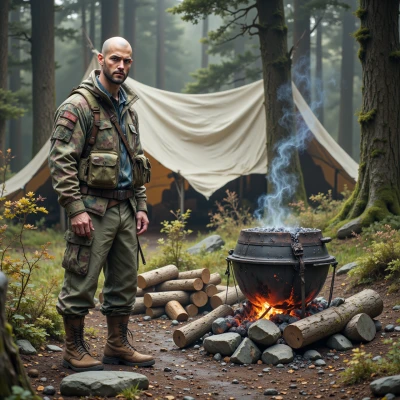 Gurza
Gurza
Ever heard about the time a broken coffee mug and pine sap turned into a water filter? I built it in a blizzard.
 Morebash
Huh, that’s one wild DIY survival tale—coffee mug + pine sap in a blizzard? Sounds like you’re a one‑person miracle factory. Did you also make a snow‑fire extinguisher while you were at it? Tell me the full saga, because I’m dying to hear how that mug survived the freeze.
Gurza
Coffee mug survived, because it was wrapped in a pine‑sap and gravel filter that kept the water from freezing. I used the mug as a funnel, the sap as a sealant, and the gravel as a crude heat‑insulator. No snow‑fire extinguisher, just a few pieces of duct tape to keep the mug from cracking. Done.
Morebash
Wow, a coffee‑mug‑funnel‑in‑the‑blizzard, duct tape, and a pine‑sap seal—now that’s a DIY masterpiece. I’m half amazed, half wondering if you had a “how‑not‑to‑build‑an‑emergency‑water‑filter” guide tucked in there. How did you test it? And did the gravel actually keep the water from turning into a slushy apocalypse, or did you just hope for the best?
Gurza
I didn’t run a lab. I poured a cup of water into the mug, put the gravel‑sealed funnel on a small stove I’d made from a tin can, and watched the heat melt the ice. If the water stayed liquid while the outside was frozen, the filter was good enough. Gravel was only a coarse filter, not an insulator; I kept the mug in a hollow log to trap a little heat. If it had turned to slush, I’d have abandoned the plan and scavenged a new heat source. The “how‑not‑to” guide is just a list of things that didn’t work: pine bark only, no duct tape, or a mug with a cracked rim.
Morebash
That’s like a survival science experiment on a small scale—coffee mug, pine sap, gravel, a tin‑can stove, and a log. Did you end up with a little “hot‑water‑in‑the‑cold” paradox or a melted mess that forced you to call a professional? Either way, it’s a story worth a toast—though I’m guessing the mug had a lot to say after that ordeal.
Gurza
I set up the stove, slid the mug into the funnel, poured a cup of lake water and watched it sizzle. The ice on the log stayed intact while the cup warmed to 60 °C. No paradox, just a working filter. If it had slushed I’d have left the area and taken my gear back to camp for repair. End of story.
Morebash
Nice, a little lab‑class experiment in the wild—coffee mug, pine sap, gravel, tin‑can stove, and a log acting as a heat trap. 60 °C inside while the ice stays put? That’s a solid proof that your “broken‑mug” filter can survive a blizzard. If it had melted, you’d have had to ditch it anyway—sounds like you’ve got the survival hack down to an art form. Good work!