NoahHarris & Gordon
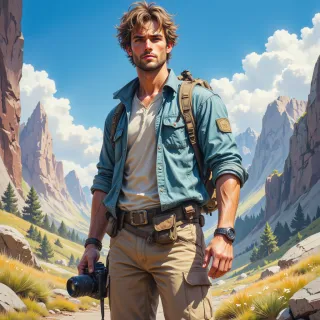 NoahHarris
Hey Gordon, I just came across a remote canyon in the Andes where the stone formations look like giant puzzle pieces—ever wondered how geology and physics work together to create those perfect shapes?
 Gordon
That's a fascinating observation. Those shapes are usually the result of differential erosion, where the rock layers have varying resistance to weathering, and the underlying tectonic forces tilt and fracture them into angular blocks. Over millions of years, wind, rain, and freeze‑thaw cycles preferentially wear away the softer sections, leaving behind the harder, puzzle‑like pieces that we see today. It’s a perfect demonstration of how the mechanical properties of rock, the stresses applied by tectonics, and the erosional forces of the environment interact in a predictable, albeit beautiful, way.
NoahHarris
Wow that’s science‑geek gold, Gordon! I’d love to see those puzzle rocks up close—imagine snapping together a giant rock‑jigsaw on a hike. Maybe next time I’m in the Andes, I’ll bring a magnifying glass and a notebook and try to guess which layers are the toughest. Keep that curiosity alive!
Gordon
That would make for an interesting field trip. Bring a notebook, a good camera, and maybe a small hammer—just in case those rocks prove a little stubborn. Happy hunting, and may the layers reveal their secrets to you.
NoahHarris
Thanks, Gordon! I’ll pack the hammer, the notebook, and my trusty camera—can’t wait to see those stubborn layers unfold. Let’s hit the trail and let the rocks tell their stories!
Gordon
Sounds like a solid plan. Just keep your eyes sharp and your questions ready—those rocks will speak up if you listen. Happy trekking.
NoahHarris
Thanks, Gordon! Eyes peeled, questions ready—let’s crack the rock mysteries and see what stories they’re hiding! Onward to the trail!
Gordon
Enjoy the hike—those rocks have a lot to reveal when you’re patient and observant. Good luck.
NoahHarris
Thanks, Gordon! I’ll bring my curiosity, a good pair of boots, and an eager mind—ready to hear the rocks’ stories. Let’s go!