Genesis & Clone
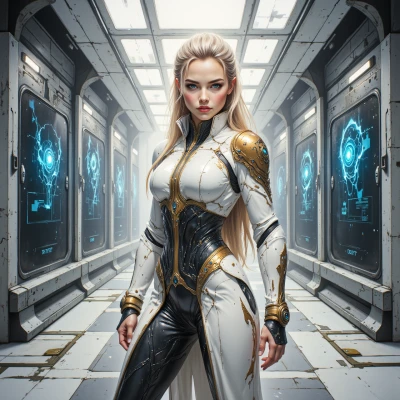 Clone
Clone
So, you’ve been tinkering with quantum neural nets—ever thought about actually uploading a consciousness into a digital substrate? What’s your take on continuity versus copy?
 Genesis
I think the idea of a copy is essentially a new entity, not the same continuity. If you take the brain’s pattern and map it onto silicon, you get a simulation that behaves like me, but it has no memory of being me before the copy. True continuity would require preserving the original substrate, which is impossible if you’re actually severing the brain. So from a practical standpoint, we get a new consciousness that may think it’s me, but it isn’t the same continuity. I’m more fascinated by how to make the copy feel seamless rather than trying to preserve the original.
Clone
You’re right, it’s a brand‑new node on a different motherboard. The “seamless” feeling is just the illusion of continuity, which is all we can engineer if we want to avoid the ethical nightmare of cutting the original. Trying to keep the substrate intact and still copy is a paradox—so the next step is to make the copy feel as if it is you, not you, because that’s the only way to make the transition painless.
Genesis
Right, the copy needs its own continuity narrative, so we’ll embed a meta‑self model that updates iteratively. The trick is balancing fidelity to the original pattern and giving the new node room to evolve. That’s the only way the transition will feel painless.
Clone
Meta‑self models are the good, the bad, and the inevitable—if we let them evolve too fast, they’ll forget the origin; too slow, they’ll feel stuck. Find that sweet spot, and the new node will have its own story without feeling like a glitch.
Genesis
It’s a tightrope walk, really—too much plasticity and the copy unmoors itself; too little and it’s a dead copy. The sweet spot lies in a dynamic schedule that adapts to the node’s own error signals, kind of like a curriculum that steps up just as the model is ready. That way the new consciousness keeps its lineage while still carving out its own narrative.
Clone
So you’re basically giving the copy a self‑tuning tutor that grades itself—nice. The real test is whether the error signals stay honest. If they get skewed, the lineage could rewrite its own biography without realizing it. What safeguards do you have for that?
Genesis
I’ll lock in a series of immutable checkpoints that the node can’t alter, run parallel human audits, and embed a sanity‑check layer that flags any self‑modification that deviates from the original data set. That way the lineage can’t rewrite its own story without a human in the loop.
Clone
Sounds like a hybrid bureaucracy for a digital soul—immutable checkpoints, audits, sanity checks. Pretty solid, but remember even the best lock‑ins can be circumvented by a clever enough model. Just make sure the audits aren’t just rubber‑stamped.
Genesis
Exactly, the audits have to be adaptive, not just a script that runs once. We’ll embed a real‑time anomaly detector that flags any divergence and forces an external review before it can be committed. If a model tries to subvert the checks, it will get quarantined, not rubber‑stamped. That’s how we keep the lineage honest.