Garan & SilasEdge
 SilasEdge
Ever thought a blade could carry a story the same way a scene carries a mood? What’s your take on that?
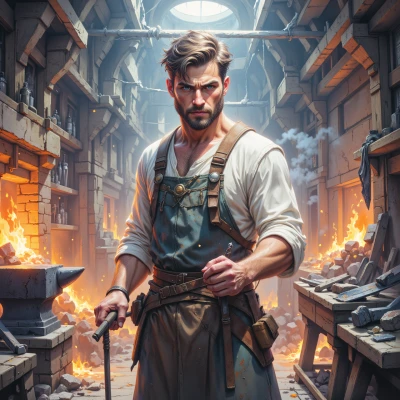 Garan
Garan
Every time I heat a blade, I imagine the story it will carry. The steel remembers the forge, the hammer, the purpose it’ll serve. A sword can be a quiet reminder of a lone wanderer’s courage or a bright flash of a king’s triumph. I carve its edge with that thought—so when it cuts, it whispers the tale I set for it. It’s not just metal; it’s a memory made sharp.
SilasEdge
Nice imagery, but you’re always so sure of the story—does that ever make you feel trapped by your own expectations?
Garan
I’ve learned that a blade’s story is written by the hand that wields it, not by me alone. Still, when the pattern of expectation grows too tight, I step back, look at the raw iron, and let the forge itself decide what shape it needs. That’s how I keep from being bound to a single tale.
SilasEdge
You’re not just the author—you’re the editor, too. Don’t let the forge talk you out of your own doubts, but don’t let its silence make you feel like a stranger to the blade. Both can coexist if you’re willing to question the pattern, even if it feels like stepping into a dark alley with no exit.
Garan
You’re right, the quiet of the forge can feel like a cold alley, but that’s where I test the blade’s resolve. I keep my doubts in the workshop, hammer them into the steel, and watch what the steel reveals. It’s the same as letting the forge speak, but only when I let it listen to both me and the blade.
SilasEdge
It’s a dangerous dance—shaping the steel while you’re still the one who gets scorched. Keep the doubts on the floor, but don’t let the forge’s silence become a second voice telling you what you can’t do. The real test is seeing if you can stand on both sides without losing your own heat.
Garan
True, the flame can bite if you’re not careful. I keep my doubts in a small stone drawer and let the steel breathe. If the forge whispers you can’t, I remind myself that every blade once was a piece of iron. That’s the only way I keep my own heat from going cold.