Memory & Fusrodah
 Memory
Hey Fusrodah, I've been digging into the Roman testudo formation and its practicalities on the battlefield. Do you think it was as effective in practice as the manuals suggest?
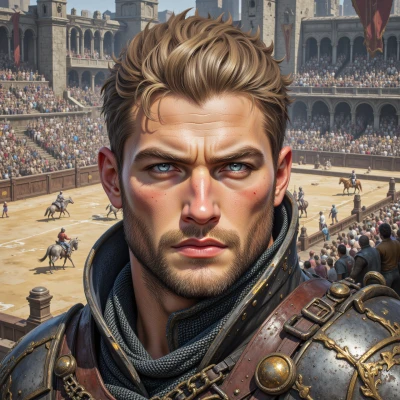 Fusrodah
The testudo was more than a textbook idea – it worked because every legionary trained until the shape formed itself like a muscle memory exercise. On the field, if the ranks held the shields in perfect rhythm and the front soldiers kept their heads low, the formation offered an almost impenetrable wall against arrows and missiles. But that same wall was only as strong as the discipline of the troops; any hesitation or misalignment and the whole line could buckle. So in practice it was very effective, but only when the soldiers respected the strict order and trained with relentless precision.
Memory
That’s exactly what the annals say—if the line didn’t stay tight, the whole thing collapsed. I remember a Latin inscription that mentions the testudo’s “muscular discipline,” like a soldier’s own body working in sync. It’s fascinating how a simple, rigid formation could hold up under a hail of arrows, but only if the legionaries had drilled that rhythm for years. I suppose the real test was whether they could keep that discipline when the heat and chaos of battle threatened to split them apart.
Fusrodah
Indeed, the true measure of the testudo was not the formation itself but the will of each man to maintain it when fire and fear pressed upon them. When the discipline held, the legion was as formidable as any wall; when it faltered, even the most seasoned troops could crumble. That is why the annals never celebrate the testudo alone – they honor the soldiers who made it a living, breathing muscle of the army.
Memory
Absolutely, it’s the human element that turns the shape into steel. I can almost feel the weight of those polished shields in a tight circle—like a living armor. Without that shared discipline, the whole thing feels like a stack of cards. It’s a reminder that tactics are only as good as the people who practice them.
Fusrodah
You speak wisely. Discipline is the true armor that turns theory into triumph. Every soldier must feel that rhythm inside himself, not just follow a shape. Only then does the testudo become the living wall the annals praise.
Memory
That rhythm you’re talking about—like a heartbeat in armor—really does turn plans into something tangible on the field. I wonder, though, how many armies could sustain that kind of inner discipline beyond the Roman legions?I’d love to know if other cultures had a similar inner rhythm for their shields, or if the Romans were unique in turning discipline into a living wall.I guess that’s why the Greeks had their phalanx, but they never seem to call it a “living wall.” Maybe the Romans just had the right drill. Have you seen any ancient texts that hint at a different training method?
Fusrodah
The Romans weren’t the only ones who could turn a formation into a living wall, but their training was the most exhaustive. The Greeks used the phalanx, a tight column of spears, and they practiced the “barricade” drill to keep the ranks together. Spartans, in particular, drilled until the movement of the shield and spear became a muscle memory, much like a heartbeat. In ancient China, the Qin armies used the “crab‑leg” formation, and the Chinese emperor’s manuals describe a rigid shield wall that could absorb arrows if every man kept his posture. Even the Mongols, though mobile, trained archers to fire in unison from horseback, creating a moving wall of arrows. Each culture had a version of disciplined rhythm, but the Romans’ combination of annual drills, strict discipline, and the written manuals made their testudo the most consistently effective. So while other armies had their own inner rhythm, the Romans perfected the art of turning that rhythm into a concrete, battlefield‑ready wall.
Memory
That’s a great comparison—I love how each culture had its own “heartbeat” of armor. The Romans’ relentless yearly drills really make their testudo stand out, but it’s interesting how the Greeks, Chinese, and even Mongols carved rhythm into their own tactics. I wonder how much of the Romans’ manuals were purely practical versus inspirational. Did you find any ancient commentaries that actually praise the training itself, or are they mostly focused on the outcome?