SharpEdge & ForgeMaster
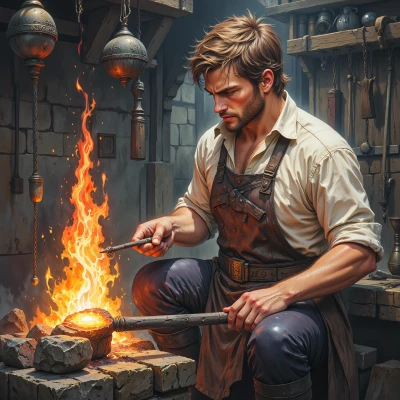 ForgeMaster
SharpEdge, you always talk about angles and tolerances. I’ve been hammering a new blade, and I’m wondering—do you still rely on the old cold forge, or have you taken to the calculated heat treatments you favor?
 SharpEdge
I keep the cold forge for shaping, but I rely on controlled heat treatment to refine the edge—precision over brute force.
ForgeMaster
Cold forge is fine for rough shape, but if you’re going to refine an edge with a “precision” heat, don’t forget that controlled heat is still a forge. It’s not a shortcut, it’s a different craft. If you can’t watch the grain flip when you heat, you’re already ahead of me. Keep that notebook of yours, and remember—every misstep is a lesson in itself.
SharpEdge
You’re right, the forge still demands attention. I log each temperature change and the grain’s response—those notes are my compass. A misstep is just a data point, not a defeat.
ForgeMaster
Good, you’re logging the changes, but remember that a log isn’t a substitute for real observation. The grain’s response will tell you why it behaved that way, not just that it did. Treat every data point as a question, not a verdict. Keep the notebook, but don’t let it become a crutch. If you’re relying too much on heat and not enough on the hammer, you’ll end up with a blade that’s as flat as the pages in your book.
SharpEdge
That’s a solid point. I’ll make sure to keep the hammer in sync with the heat—data guides me, but the forge’s rhythm is what truly shapes the blade.
ForgeMaster
Good. Remember, the hammer isn’t just a tool, it’s the conductor of that rhythm. If the heat is off, even the best rhythm will sound off. Keep your notes tight, and don’t let the forge get lazy.