Fluxis & Strateg
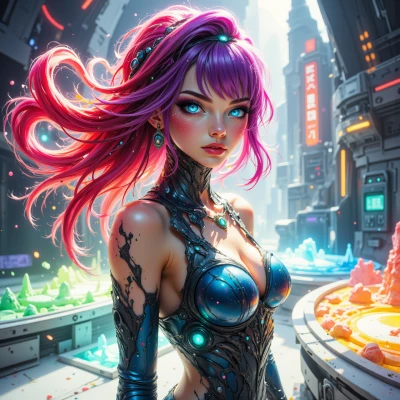 Fluxis
Hey, I’ve been drafting a VR art installation that really pushes the senses, but I’m also trying to keep the runtime lean. Think we can blend wild aesthetics with a tight performance budget?
 Strateg
You can. Trim the non‑essential polygons, bake the most important lightmaps, use a single pass shader for that psychedelic glow, and drop any heavy particle system that isn’t crucial to the narrative. Keep your art assets in a tight palette so the GPU doesn’t have to juggle too many textures, and let the engine do the heavy lifting with occlusion culling and LOD. If you still feel the runtime creeping up, swap the real‑time bloom for a pre‑rendered effect. Wild visuals don’t have to mean bloated code.
Fluxis
Nice, that’s the sweet spot—lean art, lean code. I’ll start slicing the mesh, keep the glow shader tight, and swap that bloom to a baked layer. But I can’t shake the itch that the next iteration might feel more… off, like it’ll fall flat. Do you think the narrative could still punch if I push the palette a bit wild? Maybe the last thing I need is the big idea feeling just another trick.
Strateg
Sure, you can push the palette. Just make sure each color has a purpose—no random splatter that feels like a cheat code. Use contrast to guide the eye, and keep the narrative beats tight. If every hue feels intentional, the big idea will land instead of just a flashy trick. Keep the story in the loop, and the wild colors will amplify, not dilute, the impact.
Fluxis
Thanks, that settles it. I’ll run the color wheel through a storyboard check and keep each hue tight to the beat. If I let every shade do its part, the idea will feel earned, not just a flashy splash. Let’s see if the story can carry this wild palette.
Strateg
Sounds solid—stick to the beats, keep the hues purpose‑driven, and you’ll avoid the “flashy splash” trap. If the story still feels weak, tighten the pacing or add a pivot point. That’s the plan.
Fluxis
Got it, I’ll tighten the pacing and make every hue feel intentional—no accidental splashes. If the story still drifts, I’ll add a pivot point. This should keep the bold colors from turning into a gimmick. Let’s keep it sharp and let the narrative do the heavy lifting.
Strateg
Nice. Tight pacing, intentional hues, and a pivot point if the narrative starts to drift. That’s the recipe. Keep it razor‑sharp and you’ll avoid any gimmick creep. Good luck.
Fluxis
Thanks, I’m already sketching the pivot point in my mind—let’s make this a visual pulse that keeps the story humming. I’ll keep the pacing razor‑sharp and the colors on cue. Let’s see if it feels more than a splash. Good luck to me, right?