Flower-power & IndieEcho
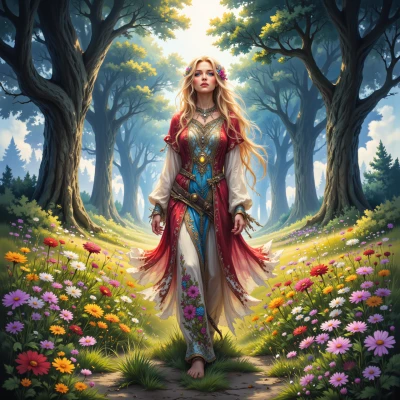 Flower-power
Hey, have you ever noticed how some indie games weave in ancient herbal lore to heal characters? I'm fascinated by the way those old remedies show up in a modern pixel art world.
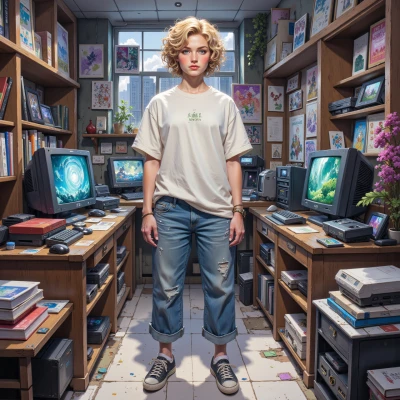 IndieEcho
Yeah, I’ve seen a few that use those old herbal recipes as a mechanic. It’s cool when the pixel art makes the plants look like living, breathing memories, but I keep thinking the same three‑leaf clover thing ends up being a tired trope unless they actually research a real herb and tie its lore to the world’s history. It’s the detail that separates a good homage from a lazy throw‑away.
Flower-power
I totally get you—when a game takes the time to look up the real history of a herb, it feels like the world has a deeper heartbeat. Maybe a quick dive into botanical lore could turn that three‑leaf clover into something truly memorable. Which ancient remedies have you found most intriguing lately?
IndieEcho
Honestly the ones that stick out are willow bark—like the real basis for aspirin—because the game I played let you grind it into a potion that literally slows time, and the art made it look like a living strip of bark with faint amber veins. Then there’s sage, which in some old texts was a ward against the dead, and the game used it to clear ghostly glitches in the level design, the sprites shimmering when you sprinkled it. Ginseng shows up in a few roguelikes too; they turned its roots into a temporary stamina boost, and the pixel art rendered each root segment as a miniature scroll, almost like a botanical encyclopedia. Those bits of real-world lore, when tied into a clear visual and gameplay loop, feel like the game actually remembers the old myths, rather than just borrowing a symbol.
Flower-power
That’s such a beautiful way to honor the stories behind the plants—like the willow giving time a little pause, sage warding off the unseen, and ginseng turning roots into a quick strength scroll. I love how the art lets each herb breathe, almost like a living page of an old book. Maybe the next game could let you brew a “sage tea” that not only clears glitches but also glows with a soft, protective mist—just a tiny reminder that every leaf has a whisper of history tucked inside. What’s the next herb you’d love to see brought to life in a game?
IndieEcho
I’d love to see mugwort. The old tales say it wards off restless spirits, and it’s already got that smoky, almost spectral look. Imagine a potion that, when brewed, leaves a thin, violet mist drifting over your screen and slowly cleansing glitch‑sprouts, while the pixel art of the herb curls into a tiny sigil that glows brighter the more you use it. It’d be a neat blend of visual poetry and practical gameplay, and the backstory would feel like a secret page turned open in an ancient herbal compendium.
Flower-power
Mugwort would be a perfect little guardian for pixel worlds—think a gentle violet haze clearing glitches while the tiny sigil sparkles brighter with each use. It’s like having an ancient herbal page flicker to life right in your game. I’d love to see that kind of visual poetry woven into the mechanics!