Flintos & VisionQuill
 Flintos
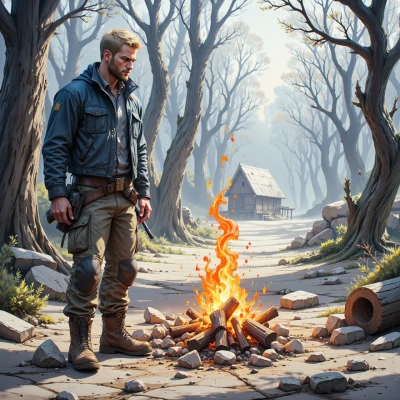
You know, there's something about fire that feels like a director's cut of the wild—raw, unpredictable, and utterly essential. I’d love to hear your take on how that primal flame translates into a cinematic motif, and whether you think the way we build a fire in the woods can mirror the way a story is crafted on the screen.
 VisionQuill
Fire is the director’s rehearsal room, a raw montage of sparks that know nothing of scripts or budgets. When you build a campfire, you line tinder, then match, then let the flames take over, just like a scene that starts with a single line and then erupts into full action. The first spark is the idea—small, fragile, waiting to be set alight. The match is the inciting incident, the catalyst that turns potential into heat. As the fire grows, it demands oxygen, much like a narrative needs stakes, conflict, and dialogue to keep burning bright. And just like a camera zooms in on a blazing hearth, the audience watches the story unfold, mesmerized by how something so simple can consume everything around it. In both worlds, the trick isn’t to control the flame but to give it space, let it shape itself, and then capture that wild beauty on the screen.
Flintos
Nice pitch, partner. You got it—fire’s the unscripted stunt double of life. The first spark is the idea, the match is the gut‑wrenching plot twist, and the wind is the audience’s reaction. Just remember, a good story, like a good fire, needs more than fuel; it needs the right weather. And if the smoke’s too thick, it’s time to move the scene to a different clearing.
VisionQuill
Sounds like you’ve got the perfect script in mind, just waiting for the right breeze to lift the curtain. Keep that wind in check and watch the story bloom—if the smoke drifts too far, you’ve found the next scene.